Basement Window Blinds: Small, High and Deep Windows Done Right
Basement windows are small, high and often set deep in a concrete wall. They need different thinking from the windows upstairs.
In short
- Cordless roller and honeycomb shades fit small, deep openings well.
- Choose synthetic fabrics: basements can be humid.
- A bedroom window that is also an emergency exit must stay easy to open.
- Blackout shades turn a basement into a proper media room.
On this page
What makes basement windows different
- Small and high: often just above ground level, at the top of the wall.
- Deep: set into thick foundation walls, which is good news for inside mounts.
- At ground level: people walking past can look straight in.
- Humid: basements are often damper than the rest of the house.
Good choices
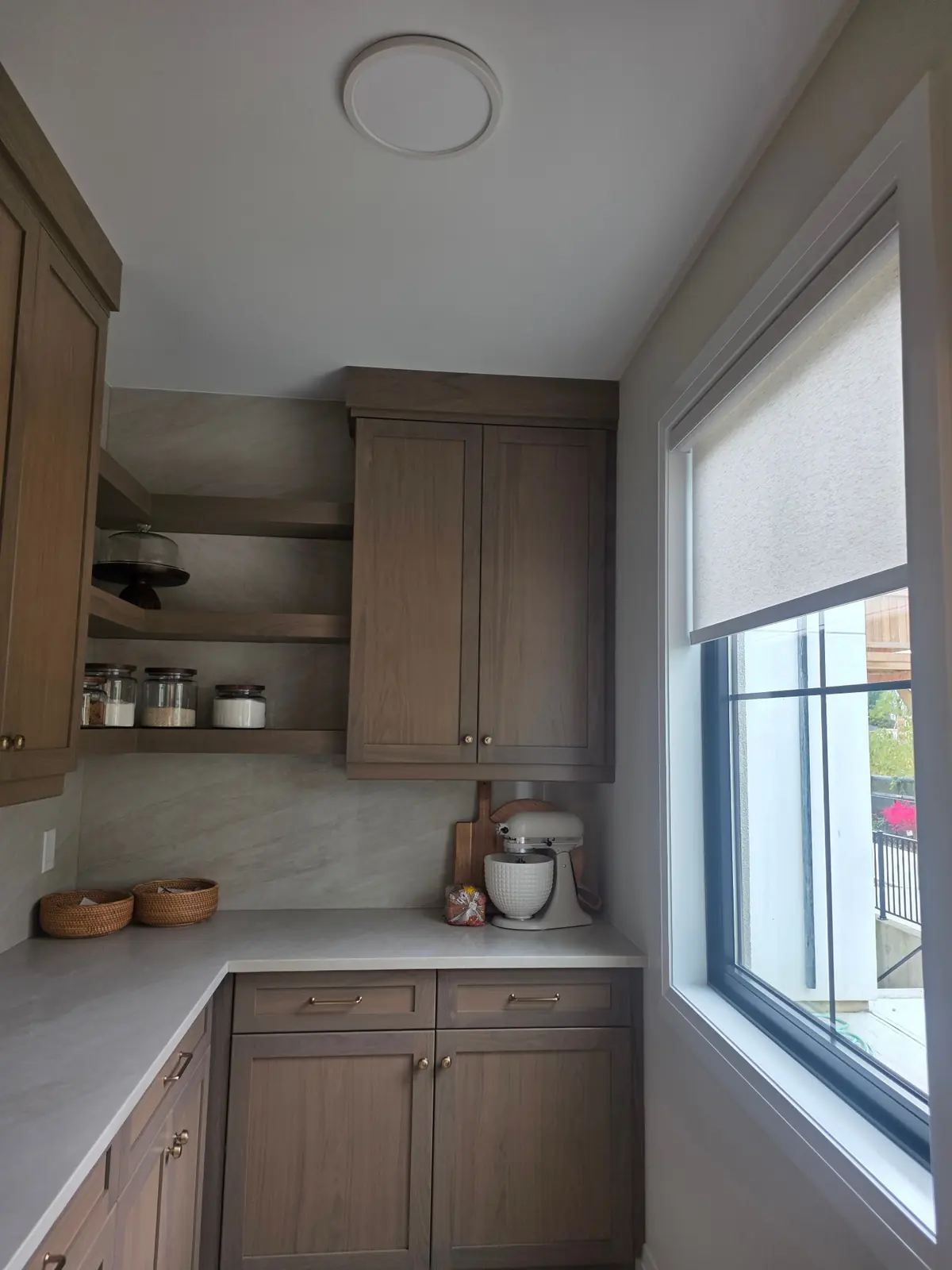
- Cordless roller shades in vinyl-coated or polyester fabric are tough, compact and easy to clean.
- Honeycomb shades add insulation on cold basement glass and look softer in finished rooms.
- Zebra blinds suit finished family rooms where you want light control.
Inside mounts make the most of deep basement frames and keep the shade tight to the glass.
Bedrooms and exit windows
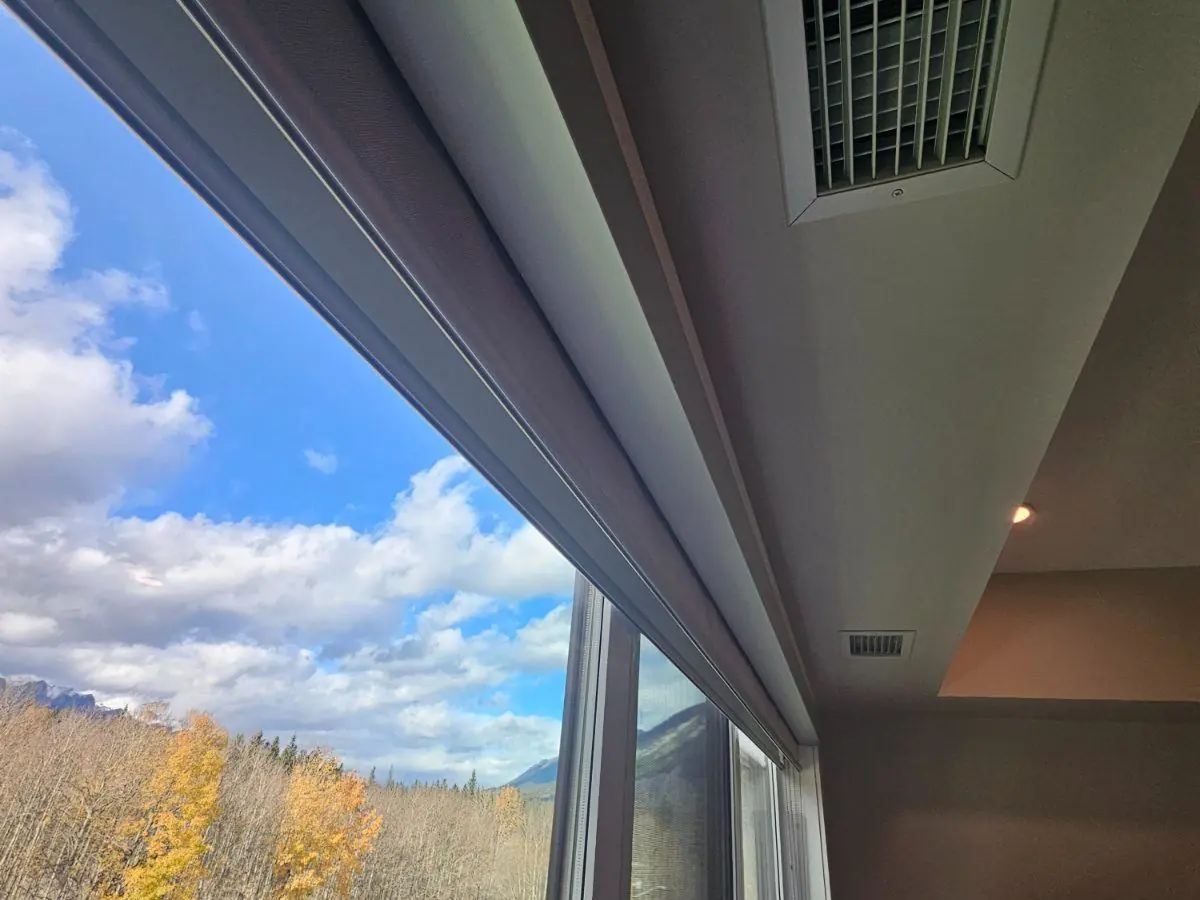
In a basement bedroom, the window may also be the emergency exit. Whatever covers it must lift completely clear of the opening and be easy to operate in the dark. A cordless roller shade that raises fully into a slim cassette is a good fit; avoid anything that blocks the opening when raised.
Privacy at ground level
Basement windows sit right at the eye level of anyone outside. Light-filtering fabrics keep daylight with privacy; top-down/bottom-up honeycomb shades can cover the glass while leaving the top open for sky. See top-down/bottom-up shades.
Media rooms and home theatres
A finished basement is the easiest place in the house to make truly dark. Blackout roller shades with cassettes, or blackout drapery mounted high, turn it into a media room. Add motors and the shades can close with the lights. See blackout curtains or blinds.
Condensation
Any window covering traps a layer of air against the glass. On cold basement windows in winter, that can increase condensation. Raise the shades for part of each day, run a dehumidifier if the basement is damp, and choose synthetic fabrics that won't mark if they get moist.
Measuring small, deep openings
Measure the width at the top, middle and bottom, and the depth of the frame. Many basement windows are a little out of square, and the narrowest width wins for an inside mount. Or let us do it: see how to measure windows for blinds.
Common questions
What blinds are best for small basement windows?
Cordless roller shades or honeycomb shades, inside-mounted in the deep frame, in synthetic fabrics that handle humidity.
Will blinds cause condensation on basement windows?
They can add to it on cold glass, because they trap air against the window. Raise them for part of each day and keep the basement dry.
Can basement windows be motorized?
Yes, though small windows are easy to manage by hand. Motors make most sense in media rooms, where shades can close with the lights.