Blackout Curtains or Blackout Blinds: Which Darkens a Room Better?
Both can block light. The difference is where the light sneaks in, and that comes down to the edges, not the fabric.
In short
- Blackout fabric blocks light; the gaps around it decide how dark the room gets.
- Blinds fit the window closely; curtains overlap it and the wall around it.
- A blackout shade under blackout curtains is the darkest combination.
- Side channels and ceiling-mounted tracks close the last gaps.
On this page
What blackout really means
A blackout fabric stops light passing through it. But a room is only as dark as its gaps: light gets in around the edges of a blind, over the top of a curtain and under the bottom of both. That's why two "blackout" products can give very different results.
Blackout blinds and shades
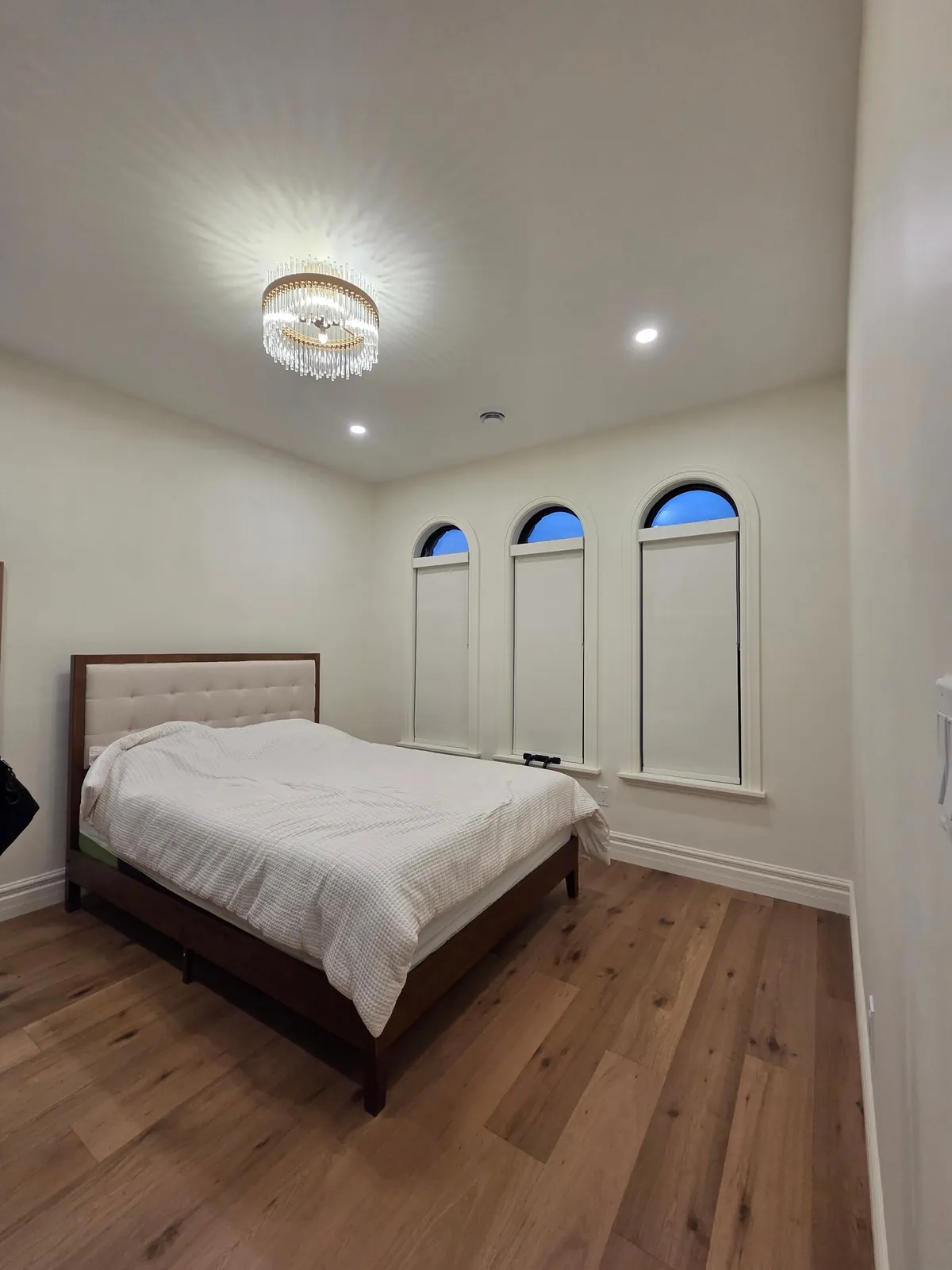
Blackout roller shades and honeycomb shades fit the window closely and look tidy.
- Inside mount: the shade sits in the frame, leaving a small gap at each side. Expect a thin line of light at the edges.
- Outside mount: the shade overlaps the frame and blocks more edge light.
- Cassette: hides the roll and stops light spilling over the top.
- Side channels: close the gaps at the edges. The darkest a blind can get.
See blackout blinds for bedrooms.
Blackout curtains
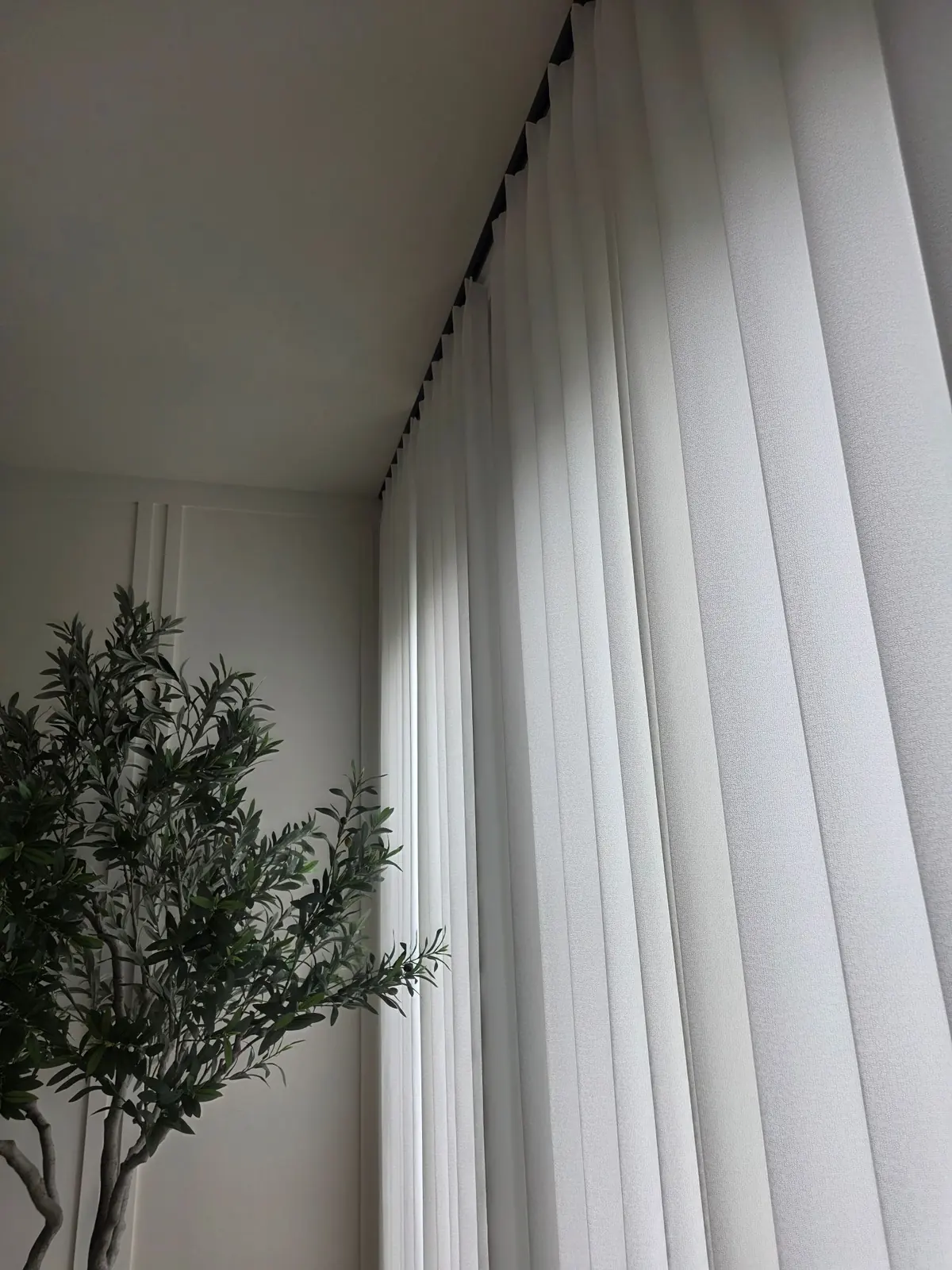
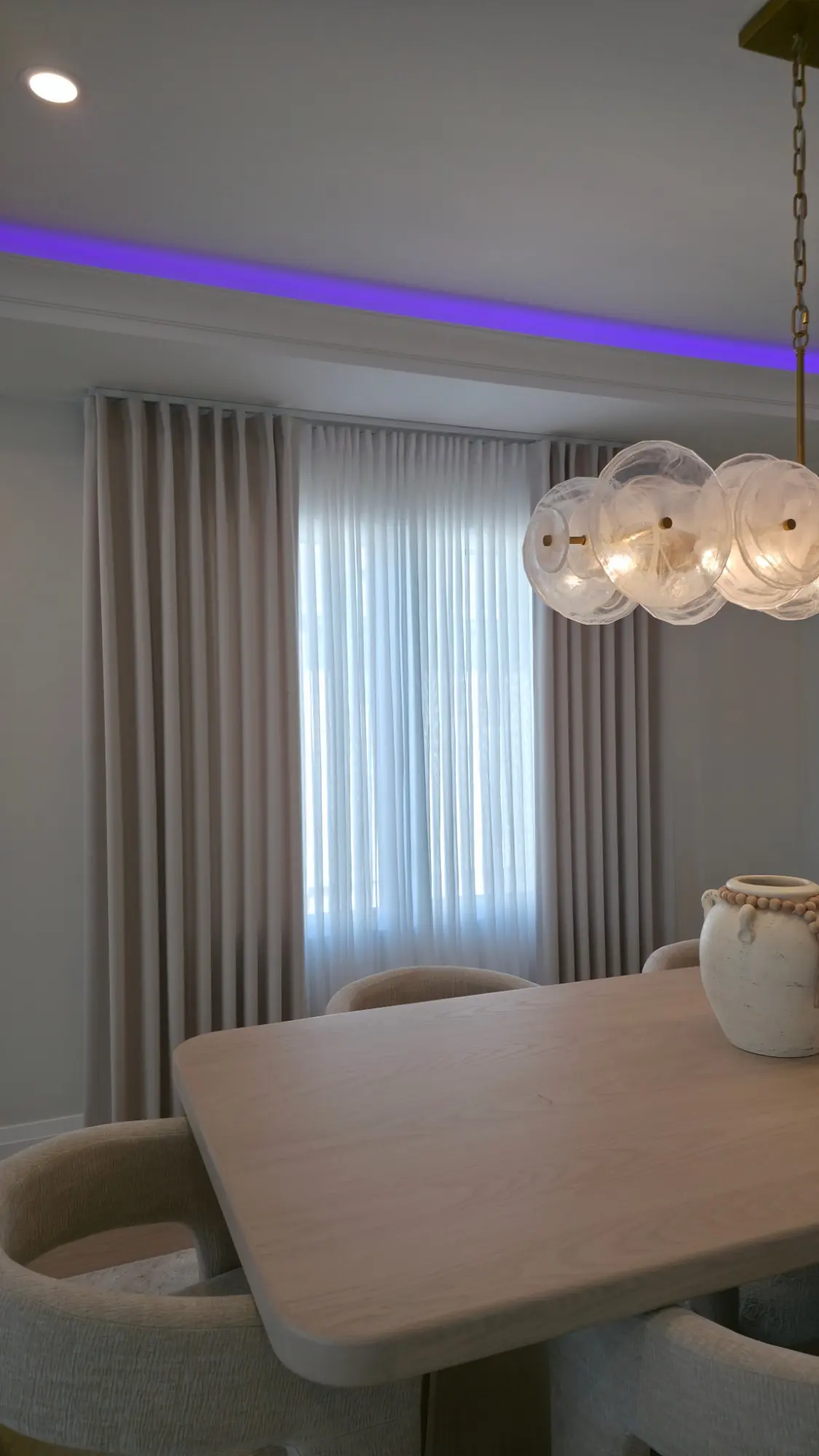
Blackout drapery covers more than the window: it overlaps the wall on both sides and, mounted high, above it too.
- Width: extend the track well past the frame so the curtains overlap the wall.
- Height: a ceiling-mounted track stops light coming over the top.
- Return: curtains that wrap back to the wall at the ends block side light.
- Overlap: centre-opening curtains should overlap where they meet.
Side by side
| Blackout blinds | Blackout curtains | |
|---|---|---|
| Light at the edges | Some, unless side channels are used | Less, when wide and high |
| Look | Clean, tailored | Soft, decorative |
| Insulation | Good; honeycomb is best | Good, especially lined |
| Cleaning | Wipe or vacuum | Vacuum; some can be cleaned |
| Kids and pets | Cordless or motorized options | No cords on a track |
| Motorized | Yes | Yes, on a track |
The darkest room: both
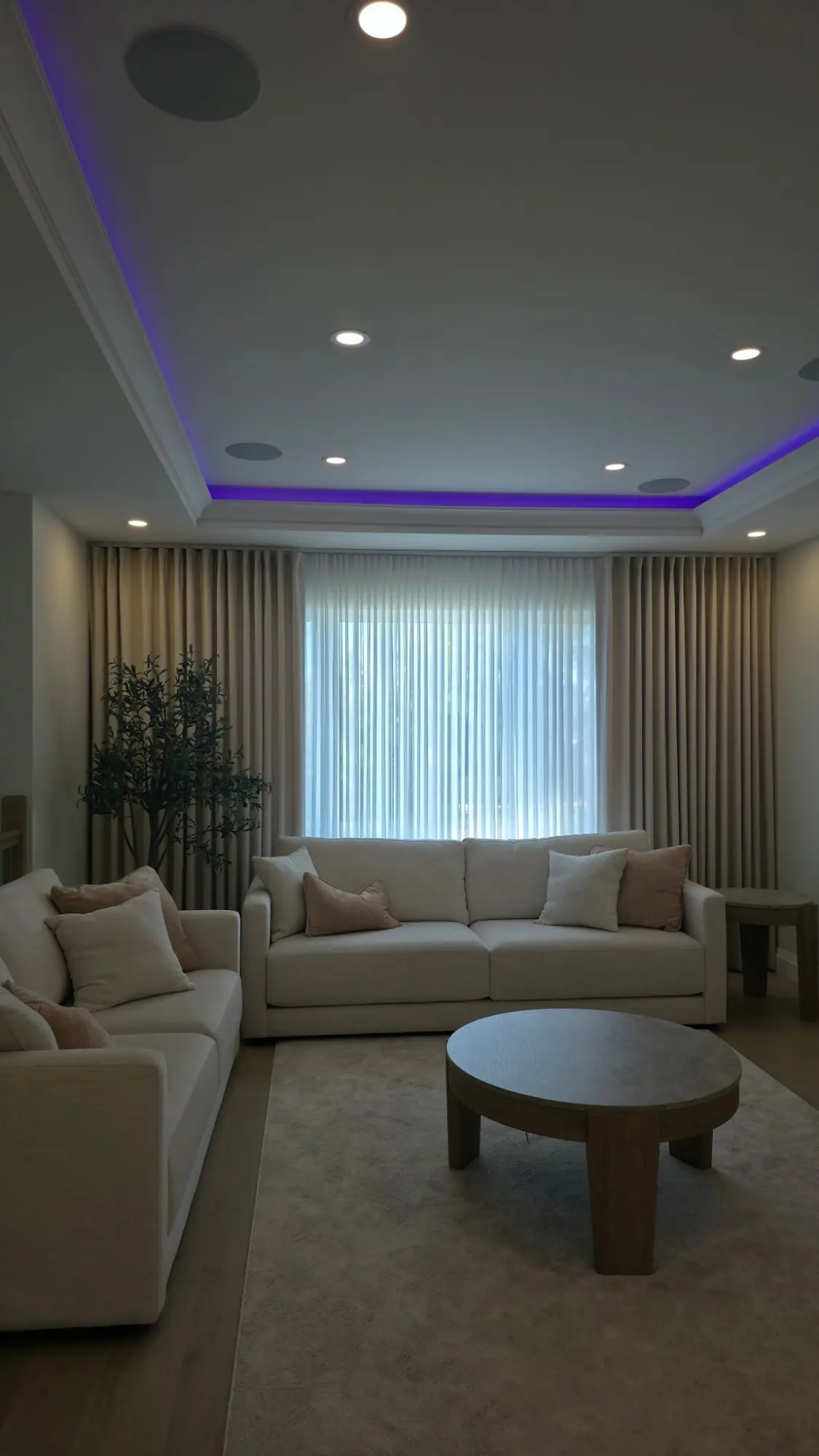
For nurseries, shift workers and media rooms, the best result is a blackout shade inside the window and blackout drapery over it. The shade blocks the glass; the curtain covers the edges. Motorize both, and one button gives you a dark room. See layering sheers with blackout.
Room by room
- Nurseries: blackout roller shade with a cassette, plus blackout curtains. Cordless or motorized only.
- Shift workers: blackout shade with side channels, plus ceiling-mounted blackout drapery.
- Media rooms: motorized blackout shades grouped with the lights.
- Guest rooms: blackout curtains alone are often enough.
Insulation
Lined drapery and honeycomb shades both slow heat loss through the glass on winter nights and cut heat gain in summer. Double-cell honeycomb shades are the most insulating shade. See honeycomb shades.
Common questions
Which is darker, blackout curtains or blackout blinds?
Curtains that are wide and mounted high usually leave fewer gaps than an inside-mounted blind. A blind with side channels, or a blind under curtains, is darker still.
Do blackout curtains keep heat out?
Lined blackout curtains reduce heat coming through the glass, especially when closed before the sun hits the window. Honeycomb shades insulate even better.
Are zebra blinds blackout?
No. Zebra blinds give full privacy when closed, but light passes around and through the bands. Use a blackout roller shade where you need real darkness.