How to Measure Windows for Blinds: Inside vs. Outside Mount
Measuring for blinds takes about ten minutes a window, and one wrong number means a blind that doesn't fit. Here's how professionals do it.
In short
- Use a steel tape measure and record to the nearest 1/8 inch (or millimetre).
- Inside mount: measure the width at the top, middle and bottom and use the narrowest.
- Outside mount: add overlap on each side and above so the blind covers the frame.
- Write width first, then height, and label every window.
On this page
Before you start
- A steel tape measure. Cloth tapes stretch.
- A pencil and a sheet with a line for each window.
- Label every window (Kitchen sink, Primary bedroom left) and measure each one, even if they look identical. They often aren't.
- Record to the nearest 1/8 inch, or millimetre, and don't round.
Inside or outside mount?
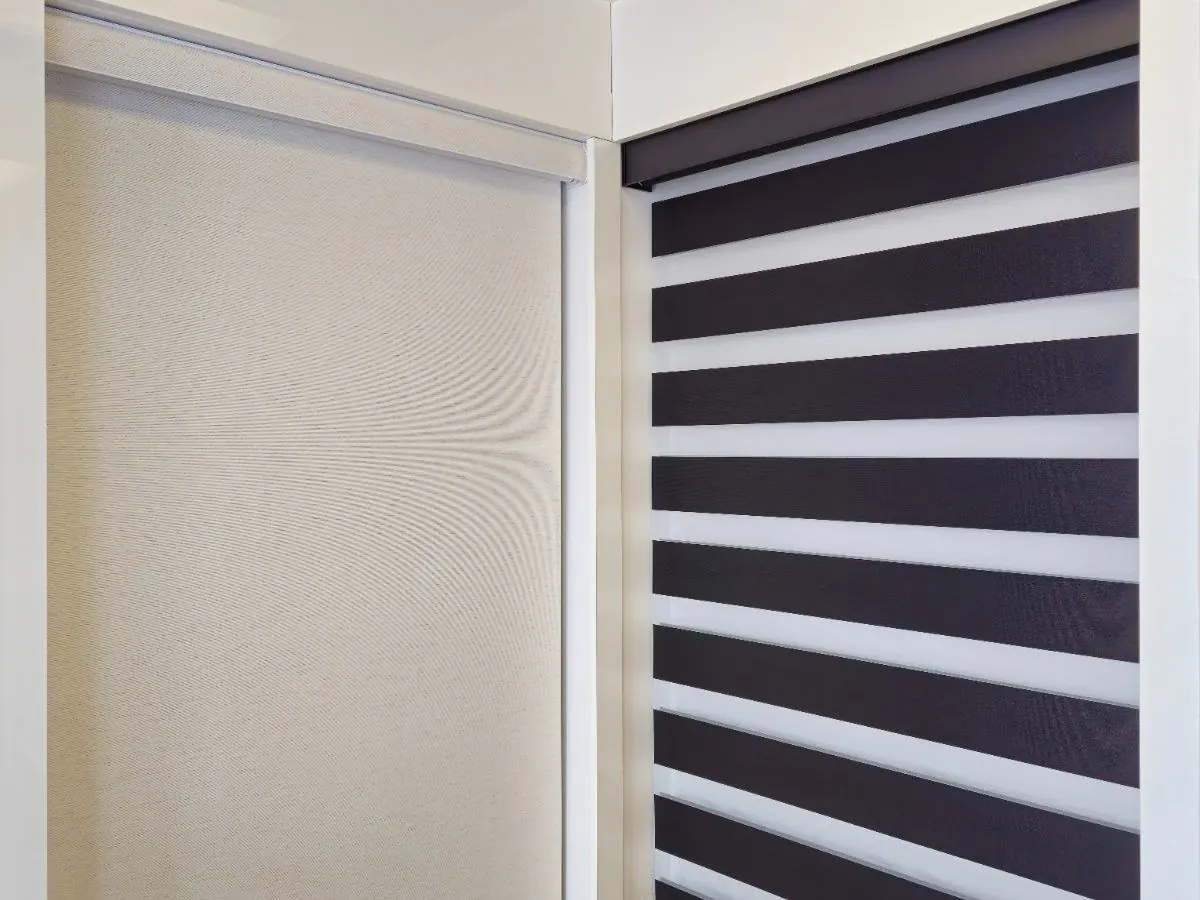
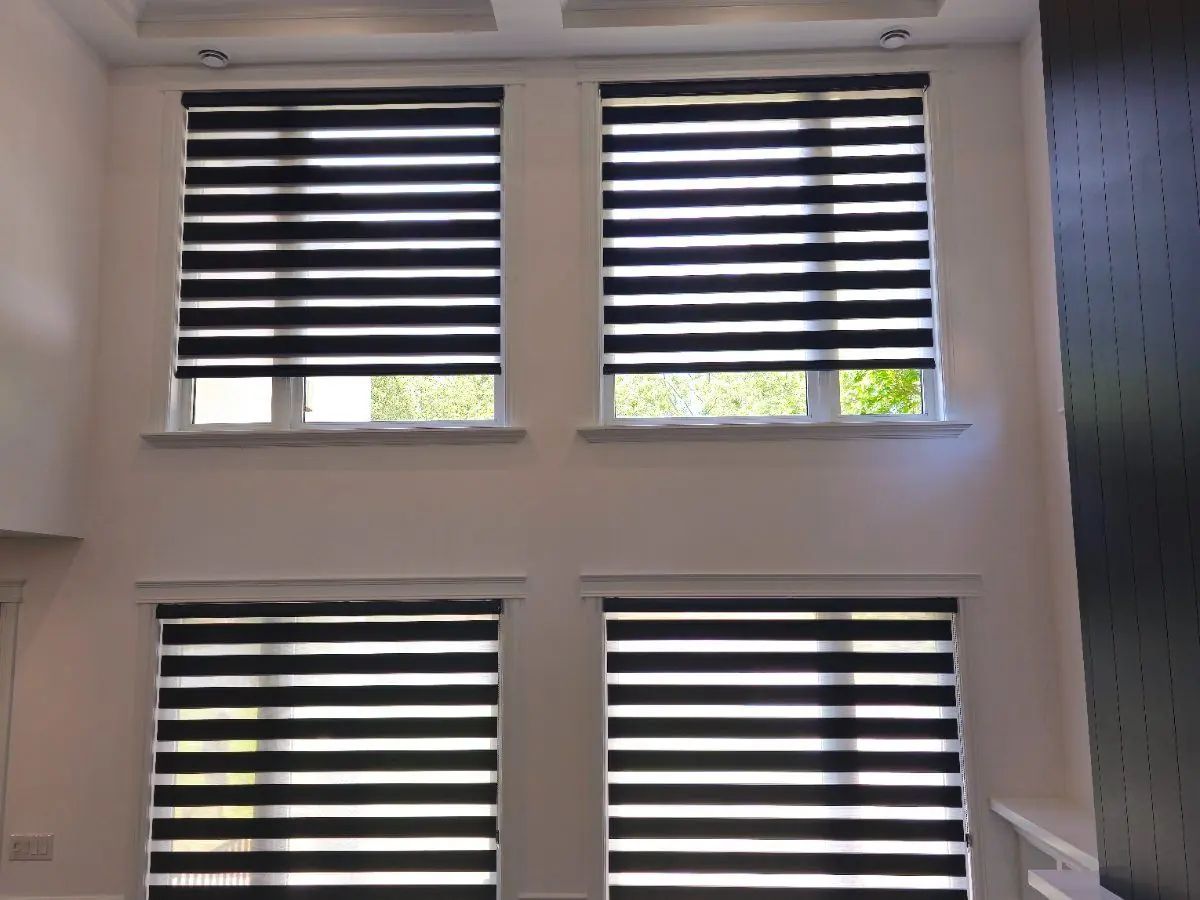
An inside mount sits within the window frame. It looks built-in and shows off the trim, but needs enough frame depth and leaves a small gap at each side. An outside mount fixes above the window and overlaps the frame. It blocks more light, hides out-of-square frames and suits shallow windows. Bedrooms that need darkness usually suit outside mounts. See blackout blinds.
Measuring for an inside mount
- Width: measure inside the frame at the top, middle and bottom. Write down the narrowest.
- Height: measure from the top of the opening to the sill at the left, centre and right. Write down the longest.
- Depth: measure from the glass (or the first obstruction) to the front of the frame. Cassettes and headrails need a minimum depth, so check it against the product.
- Obstructions: note window cranks, handles, alarm sensors and tilt latches that the shade must clear.
- Squareness: measure both diagonals. If they differ noticeably, an outside mount may look better.
- Don't deduct. Give the exact opening size. The factory makes the small deduction an inside-mount blind needs.
Measuring for an outside mount
- Width: measure the area you want to cover, then add overlap on each side. A few centimetres each side improves privacy and light control.
- Height: measure from where the bracket will go, usually a little above the frame, down to the sill or just below it.
- Mounting surface: make sure there is flat wall or trim above the window for the brackets.
Patio doors and big windows
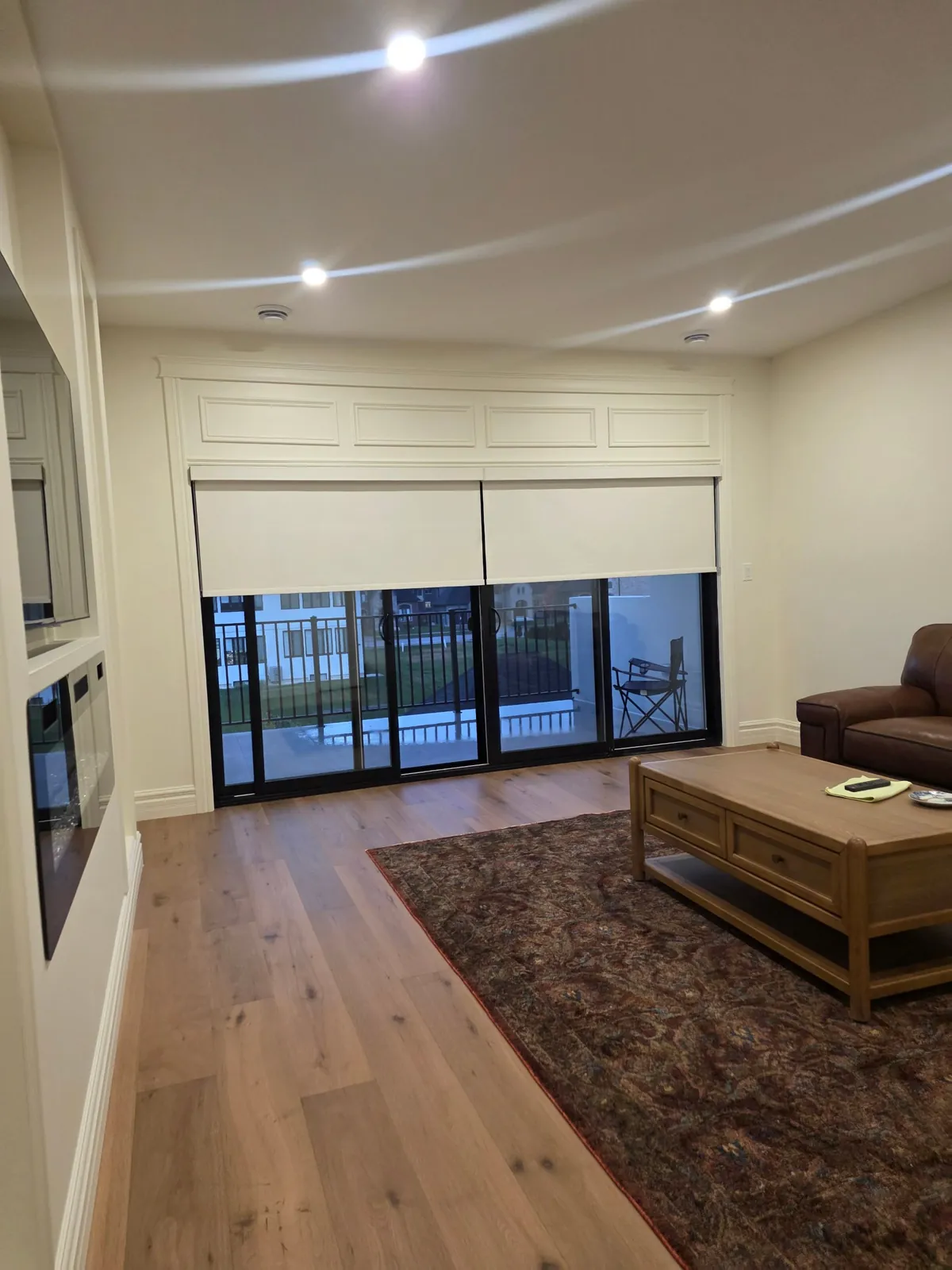
For patio doors, mount above the frame so the raised shade clears the door handle, and consider two shades side by side on wide doors. See patio door blinds. For very wide windows, check the maximum width of the fabric you want; we often split large windows into two or three shades.
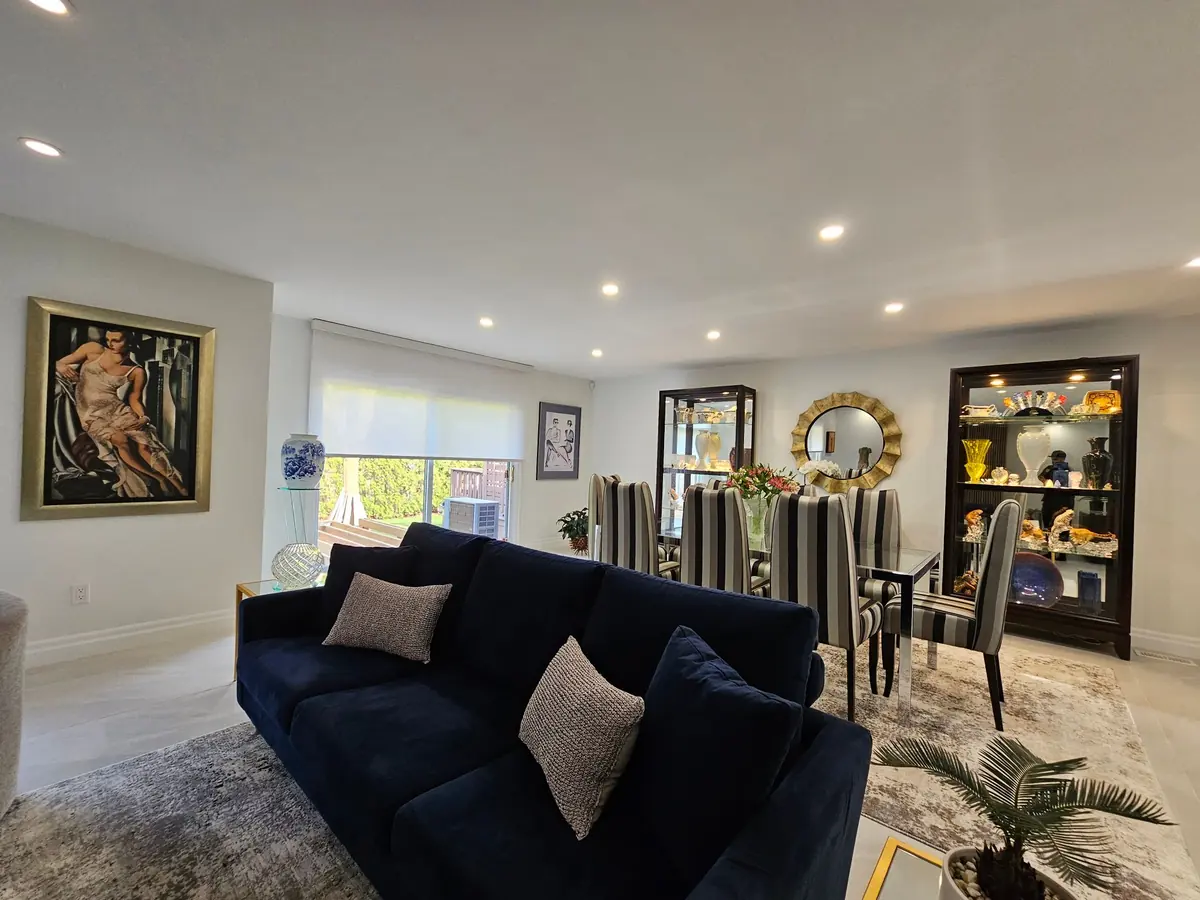
Curtains
For curtains, measure the width of the track you want (usually wider than the window so curtains stack on the wall) and the height from the track to the floor. See curtain styles.
Common mistakes
- Measuring once instead of three times.
- Mixing up width and height. Width always comes first.
- Deducting for an inside mount yourself.
- Forgetting the depth or the door handle.
- Rounding to the nearest half inch.
Measuring for motorized shades
Motorized shades need a few more notes:
- Motor side: which side of the window the motor should sit, usually the side nearest the power source for hardwired motors.
- Power: whether there is low-voltage wiring at the window, an outlet nearby, or whether battery or solar is the better choice.
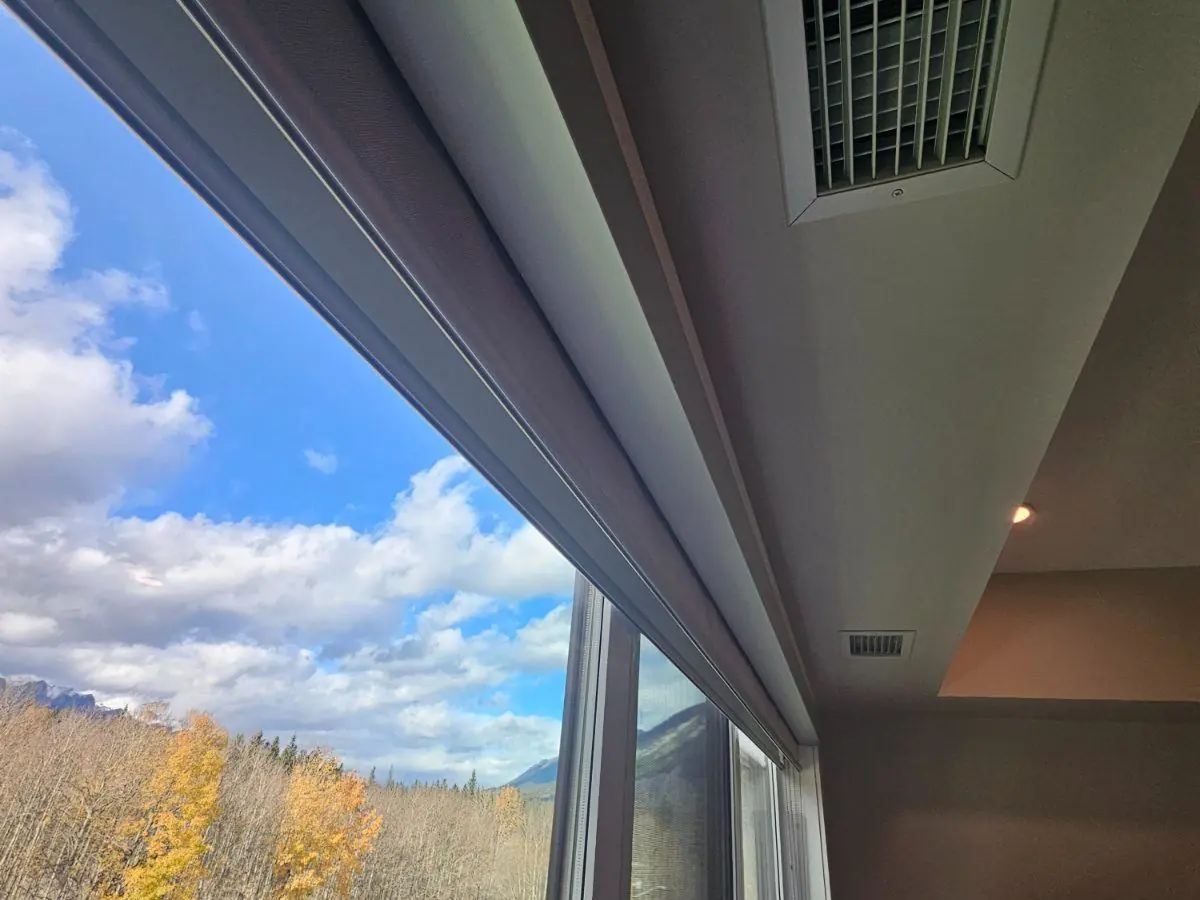
- Depth: some motorized cassettes need a little more frame depth than manual ones.
- Controls: where you want switches or remotes, and which smart home system you use.
Or let us measure
Every free consultation includes professional measuring of each window, depth and obstructions. When we take the measurements, getting them right is our job.
Common questions
Should I round up or down?
Neither. Record each measurement to the nearest 1/8 inch or millimetre.
Should I deduct for an inside mount?
No. Give the exact opening size. The manufacturer makes the deduction the blind needs to operate.
Which is better, inside or outside mount?
Inside mounts look neater and show off trim. Outside mounts block more light and suit shallow or out-of-square frames.
Do motorized shades need different measurements?
The window measurements are the same, but we also note the motor side, the power source and the frame depth the motor needs.