Blackout Blinds for Bedrooms and Nurseries: How to Get a Truly Dark Room
Blackout fabric stops light passing through it. Whether your room actually gets dark depends on what happens at the top, the sides and the bottom of the shade.
In short
- Light leaks around the edges, not through blackout fabric.
- Outside mounts, cassettes and side channels close the gaps.
- A blackout shade layered with blackout drapery gets closest to hotel-dark.
- In nurseries, use cordless or motorized shades only and keep cribs away from windows.
On this page
Blackout or room-darkening?
Room-darkening fabrics let a little light through. The room is dim but you can still see. Blackout fabrics have a coating or backing that stops light passing through the fabric entirely. For shift workers, light sleepers, nurseries and media rooms, start with blackout.
Where the light gets in
Even with blackout fabric, light finds four routes:
- The sides. An inside-mounted shade is made slightly narrower than the frame so it can roll freely, which leaves a thin gap down each side.
- The top. Light spills over an open roll.
- The bottom. If the bottom bar doesn't sit on the sill, light shows underneath.
- Uncovered glass. Arches, transoms and sidelights above or beside the main window.
Five ways to make a bedroom darker
- Mount outside the frame. Let the shade overlap the window by several centimetres on each side and above. It is the simplest fix for side gaps.
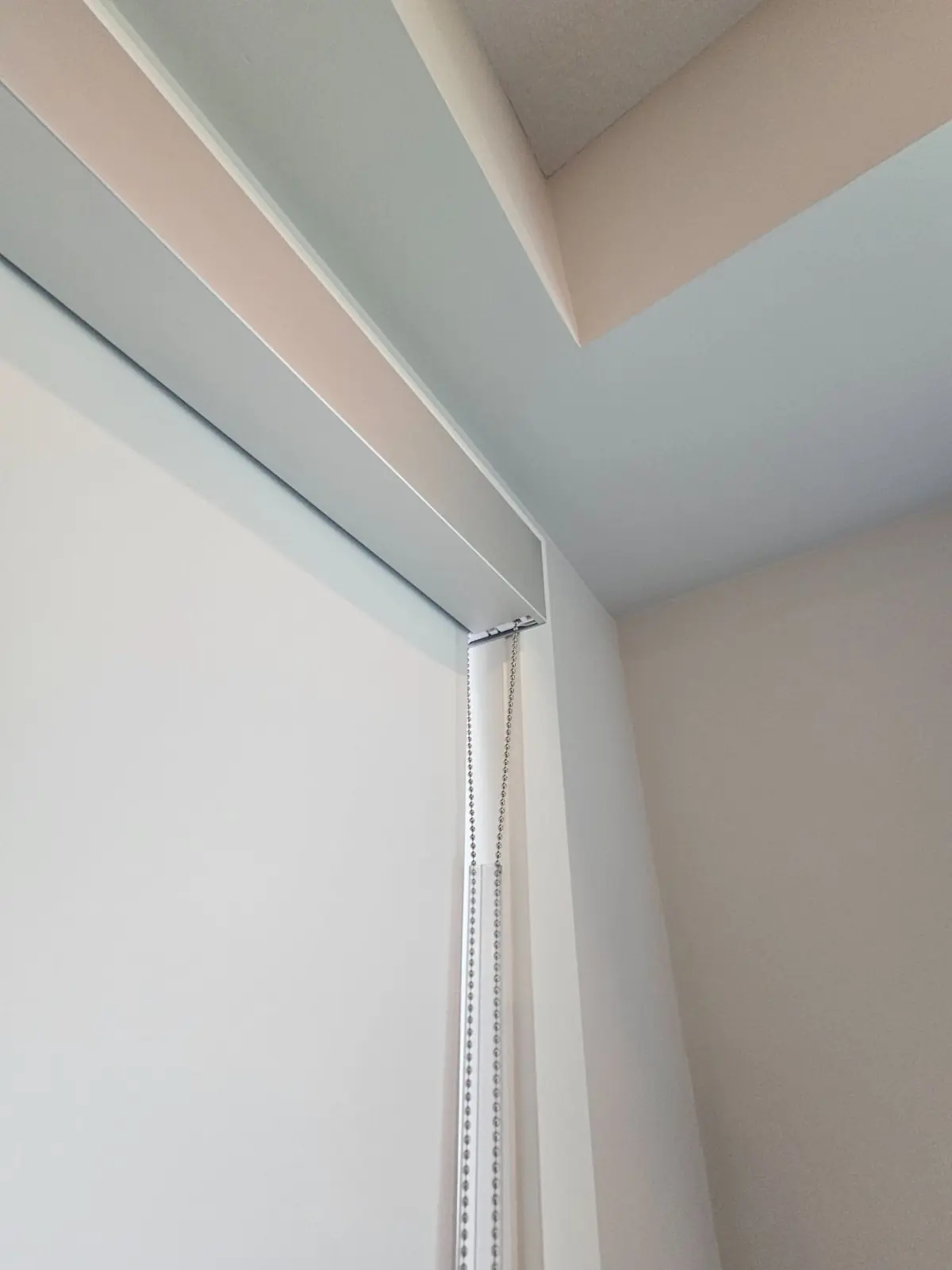
- Add a cassette. A cassette encloses the roll and blocks light over the top.
- Use side channels. Tracks down each side hold the fabric edges. With a cassette and a sealed bottom, this is as dark as a shade gets.
- Layer with drapery. Blackout drapery on a ceiling-mounted track that wraps back to the wall covers whatever the shade misses. See layering sheers with blackout.
- Consider blackout honeycomb. Blackout cellular shades darken well and insulate too. See honeycomb shades.
Nurseries and children's rooms
- Cordless or motorized only. Canada's rules limit reachable cords to 22 cm and loops to 44 cm, but the safest choice in a child's room is no cord at all. See Canada's cord rules.
- Keep the crib, bed and climbable furniture away from windows.
- Motorized shades help with naps. Close the room from the hallway, or set a schedule for nap time and bedtime. Today's motors are quiet enough not to wake a sleeping baby.
- Plan for growing up. A blackout shade that is right for a nursery still works when it becomes a teenager's room.
Shift workers and media rooms
If you sleep during the day, the darkest setup we install is a blackout roller shade in a cassette with side channels, plus blackout drapery. In media rooms the goal is no glare on the screen; a blackout or room-darkening shade usually does it, with side channels if the room is used on sunny afternoons.
Arched windows and transoms
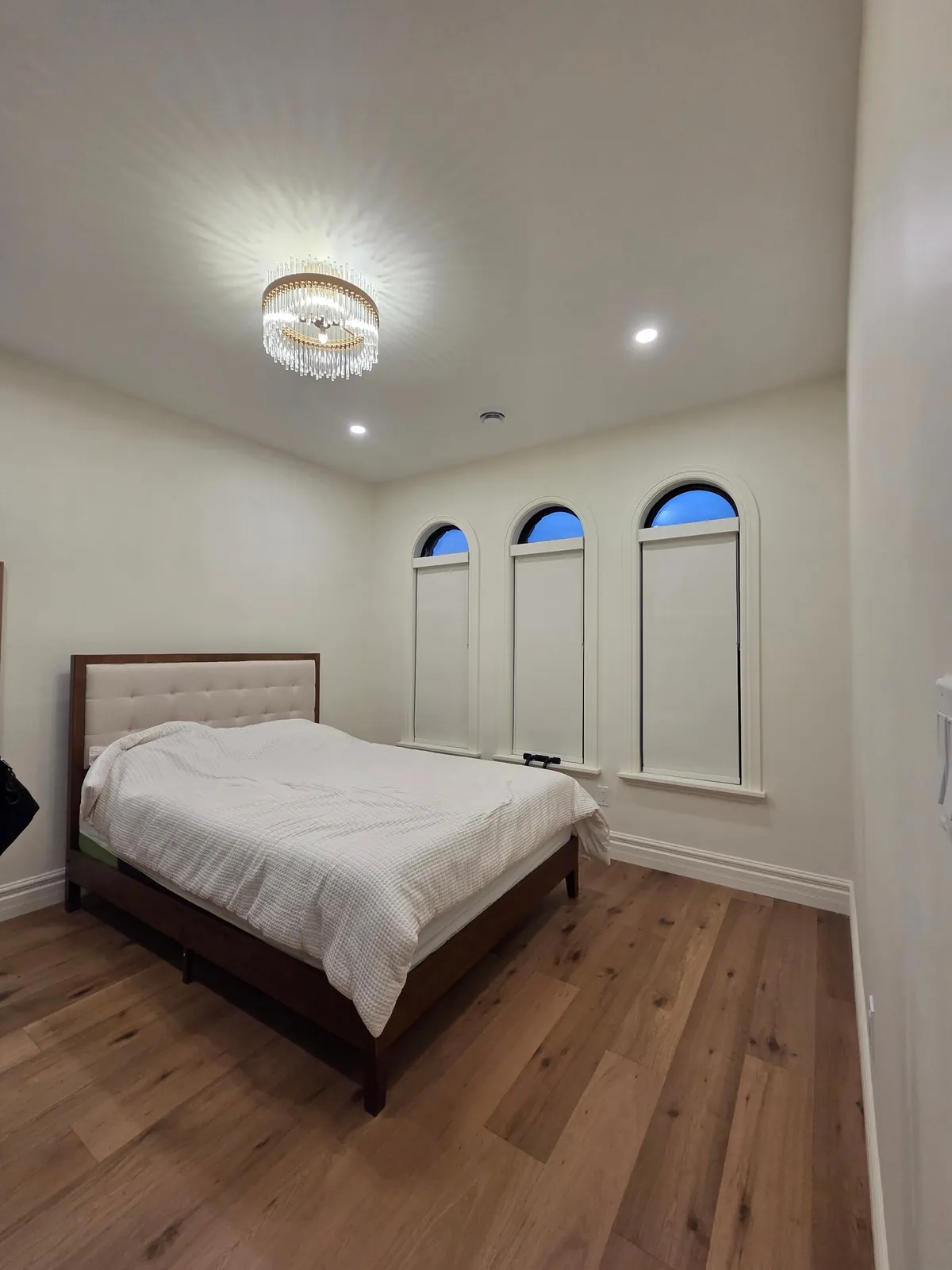
Arches and transoms above a bedroom window let in light even when the main shade is down, as in the bedroom above. Options are a fixed covering made for the arch, drapery mounted above the arch that closes over the whole window, or simply accepting a softer darkness. See arched, tall and two-storey windows.
How it looks from outside
Blackout fabrics are often white or neutral on the back, so the house looks uniform from the street, whatever colour faces the room. If you have a dark fabric in mind, ask to see the back of the sample.
Motorized blackout for bedrooms
A motorized blackout shade can close itself at bedtime and open at your wake-up time, which many people find easier to wake up to than an alarm in a dark room. Our smart motors (2 Nm of torque) are quiet and work with Apple Home, Google Home, Alexa and SmartThings. Every motor and its programming is covered by our full 3-year in-house warranty.
Blackout and summer heat
A blackout shade with a white or light back reflects much of the sun's heat back through the glass. In west-facing bedrooms that heat up in the afternoon, lowering the blackout shade before the sun arrives keeps the room noticeably cooler at bedtime.
Common questions
Do blackout blinds help keep heat out?
Yes. Lowered on hot afternoons, they block the sun’s heat as well as its light, especially fabrics with a white or reflective back. Blackout honeycomb also insulates in winter.
Are blackout curtains enough on their own?
Usually not for a truly dark room. Light leaks over the top and around the sides. A blackout shade behind the curtains closes those gaps.
What is the darkest option you install?
A blackout roller shade in a cassette with side channels and a sealed bottom, layered with blackout drapery on a ceiling track.
Can a blackout shade open by itself in the morning?
Yes. A motorized shade can open at a set time each morning, and with smart home apps you can tie it to your alarm or to sunrise.