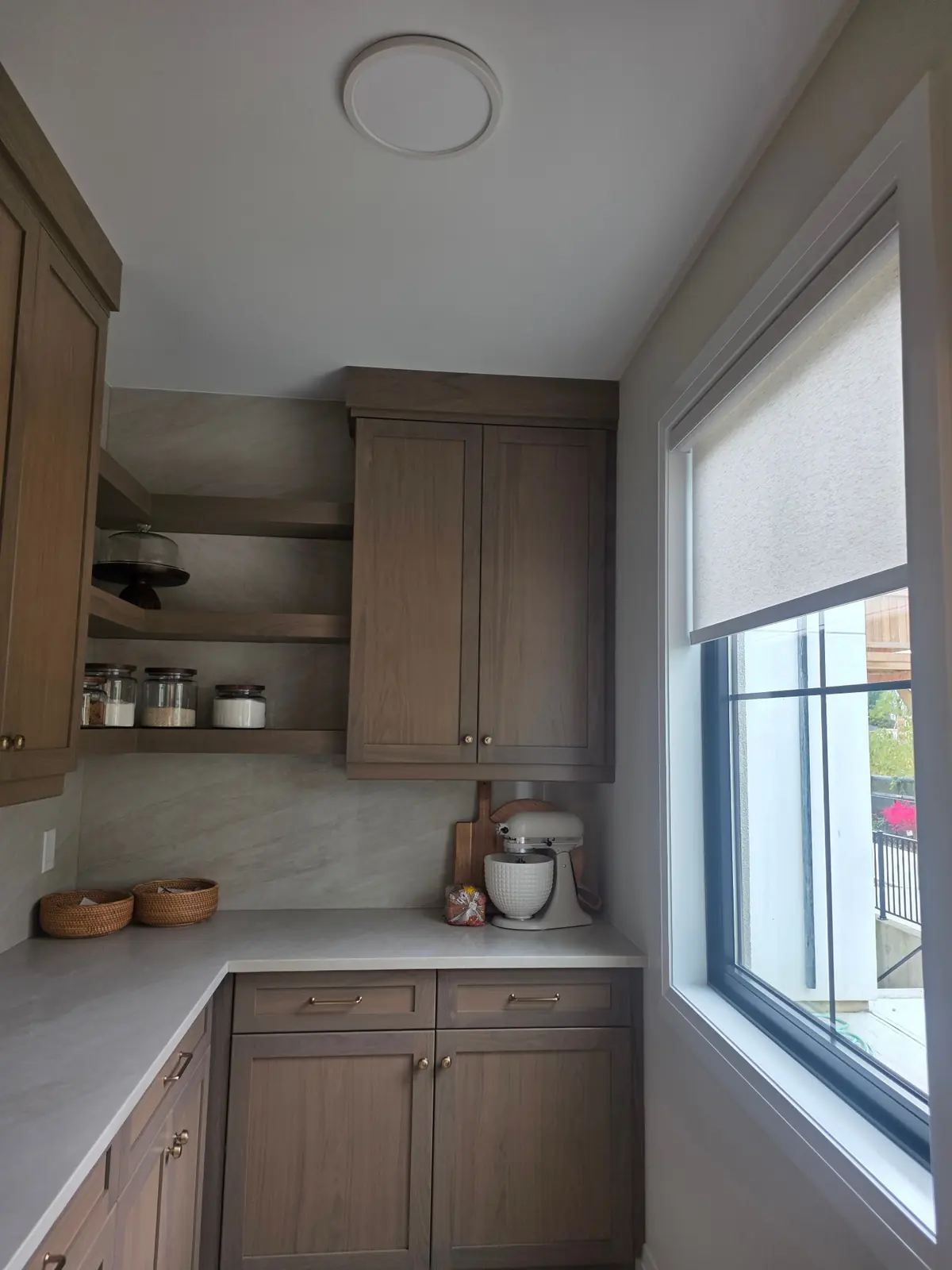
Kitchen Window Blinds: What Works Over the Sink and Beyond
Kitchens are hard on window coverings: steam from the stove, splashes from the sink, grease in the air and a counter between you and the window.
In short
- Choose synthetic, wipe-clean fabrics; avoid natural fibres near the sink and stove.
- Zebra blinds and roller shades are the most popular kitchen choices.
- If you have to lean over the counter, a motor or a chain beats a cordless bottom rail.
- Keep one look across an open kitchen, dining and family room.
On this page
What kitchens throw at blinds
- Steam and humidity from cooking and the dishwasher.
- Splashes at the sink.
- Grease in the air near the stove, which makes dust stick.
- Reach: the window is often behind a sink or counter.
- Sun on the counter: glare on prep areas, and heat on west-facing kitchens in the late afternoon.
Over the sink
The window over the sink takes the most punishment. Choose fabrics that shrug off moisture and wipe clean:
- Roller shades in vinyl-coated or PVC-backed fabric are the toughest. A damp cloth cleans them.
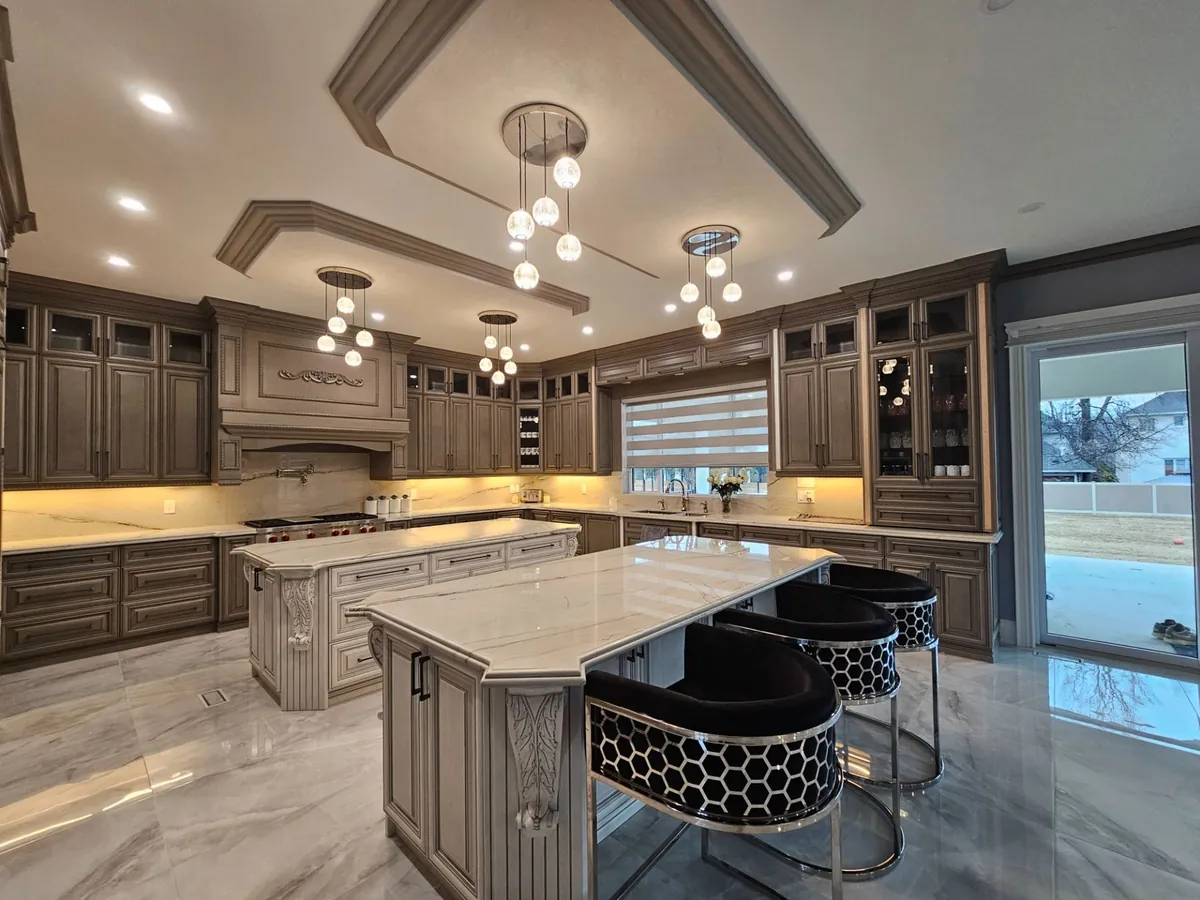
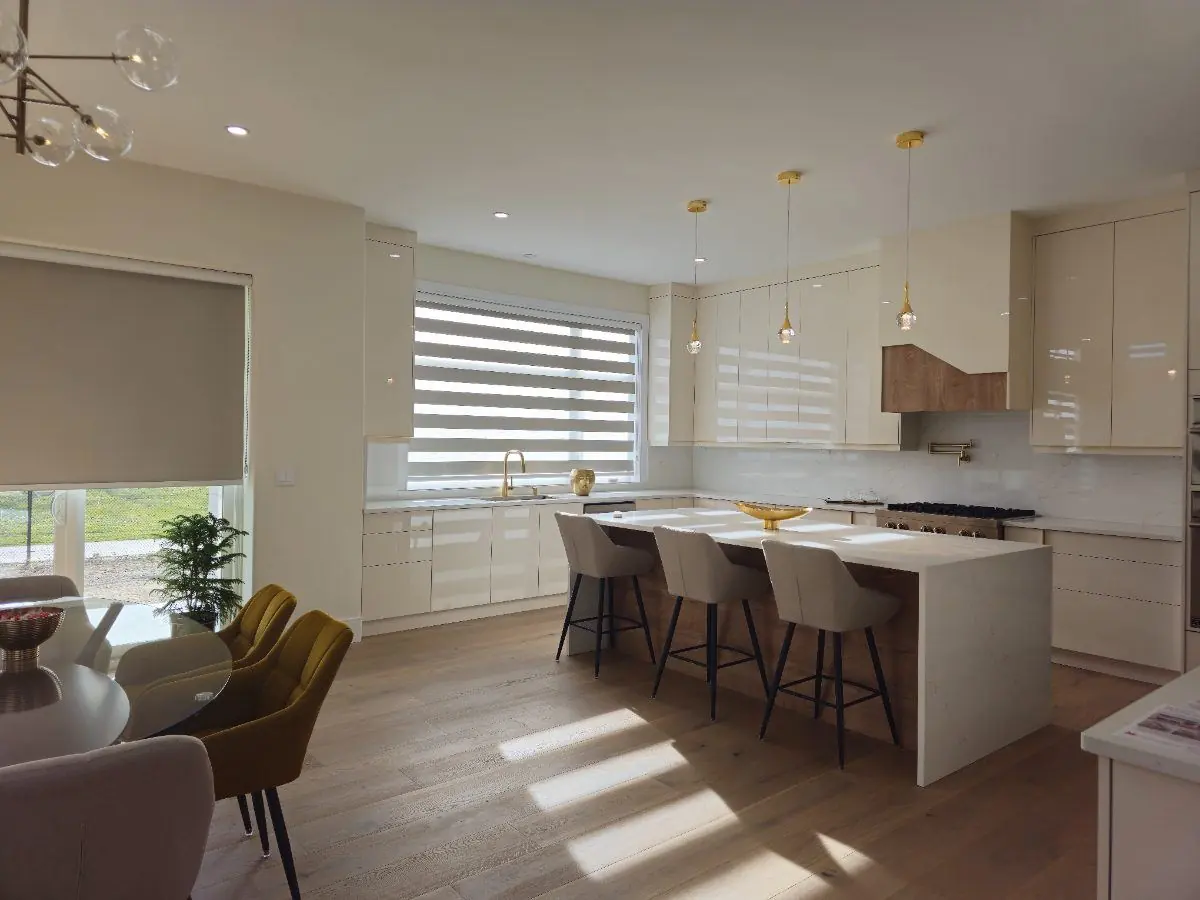
- Zebra blinds in polyester handle humidity well and give privacy with light.
- Avoid natural fibres, fabric Roman shades and anything that sags or marks when damp.
Reaching over the counter
A cordless shade has to be pulled down by its bottom rail, which means leaning across the sink. Better options:
- Motorized: a remote, a wall switch or "Hey Google, open the kitchen shade". See smart motors for blinds.
- Chain-operated, with the chain fixed to the wall to meet Canada's cord rules. See child-safe blinds.
Mounting around taps and cabinets
Kitchen windows are often set between upper cabinets, with a tall tap in front. An inside mount keeps the shade tight to the glass and clear of the tap. Check the window opens and the shade clears any crank handle; see blinds for casement windows.
Light and glare on the counters
For a kitchen that gets strong sun, a light-filtering or screen fabric softens glare on the counters without making the room dim. West-facing kitchens benefit most from lowering the shade before the late-afternoon sun arrives. See shades for south- and west-facing windows.
Kitchen patio doors
Many kitchens open onto the yard through a sliding door. Roller shades, vertical sheers or drapery on a track all work; choose something that stays out of the way when you're carrying food outside. See patio door blinds.
One look for open kitchens
When the kitchen, dining room and family room share one space, use the same fabric colour and cassette finish on every window you can see at once. A zebra blind over the sink and roller shades elsewhere work well together when the cassettes match.
Keeping them clean
Dust kitchen shades weekly, and wipe vinyl and polyester fabrics with a damp cloth and mild soap when needed. Our cleaning guide covers each product.
Common questions
Are zebra blinds OK in a kitchen?
Yes. Polyester zebra fabrics handle kitchen humidity well. Over the sink, a vinyl-coated roller shade is the most splash-proof choice.
What is the easiest kitchen blind to clean?
A roller shade in vinyl-coated or PVC-backed fabric. It wipes clean with a damp cloth.
How do I reach a blind behind the sink?
Choose a motorized shade, or a chain-operated one with the chain fixed to the wall, instead of a cordless shade you have to pull by the bottom rail.