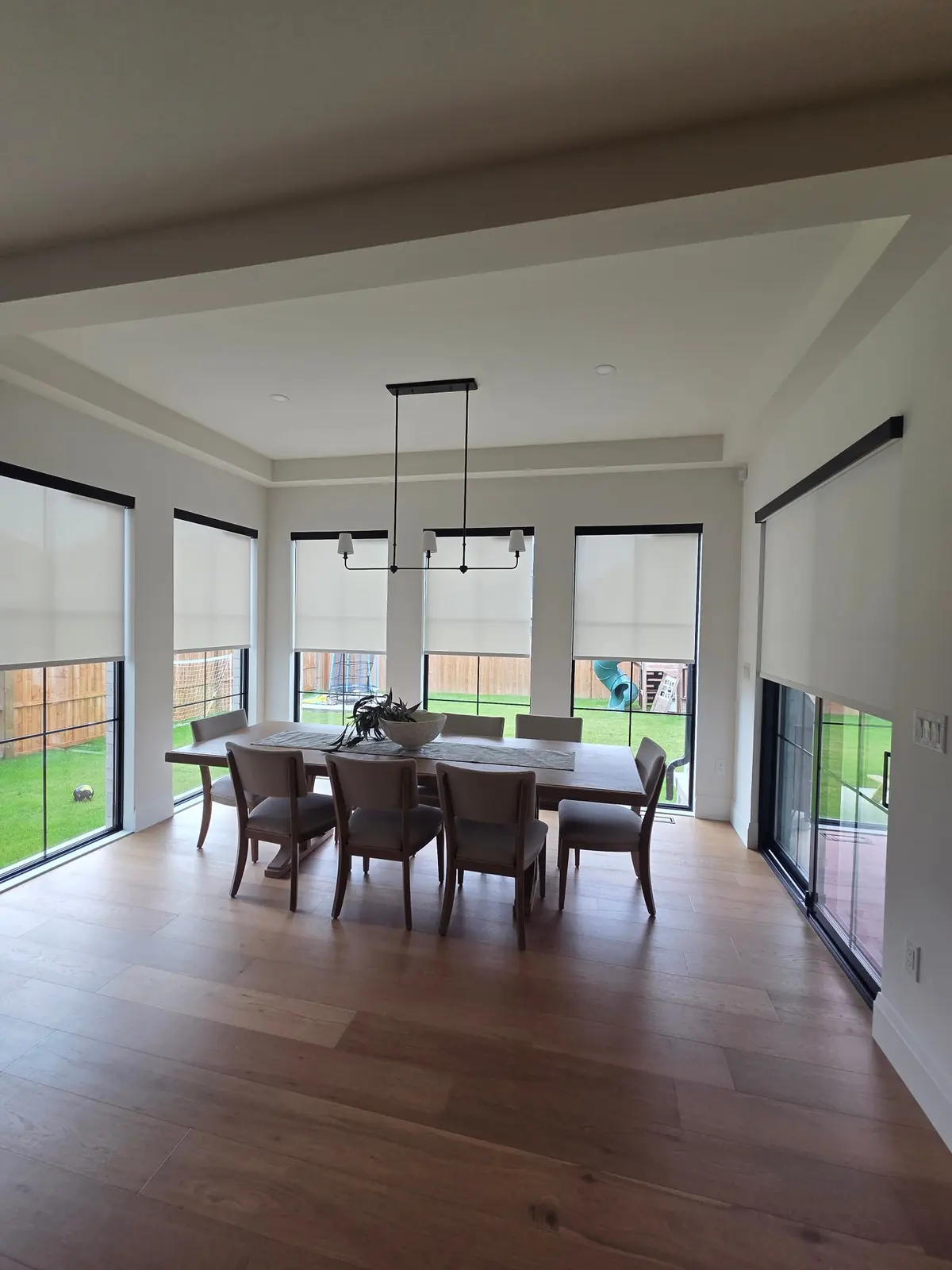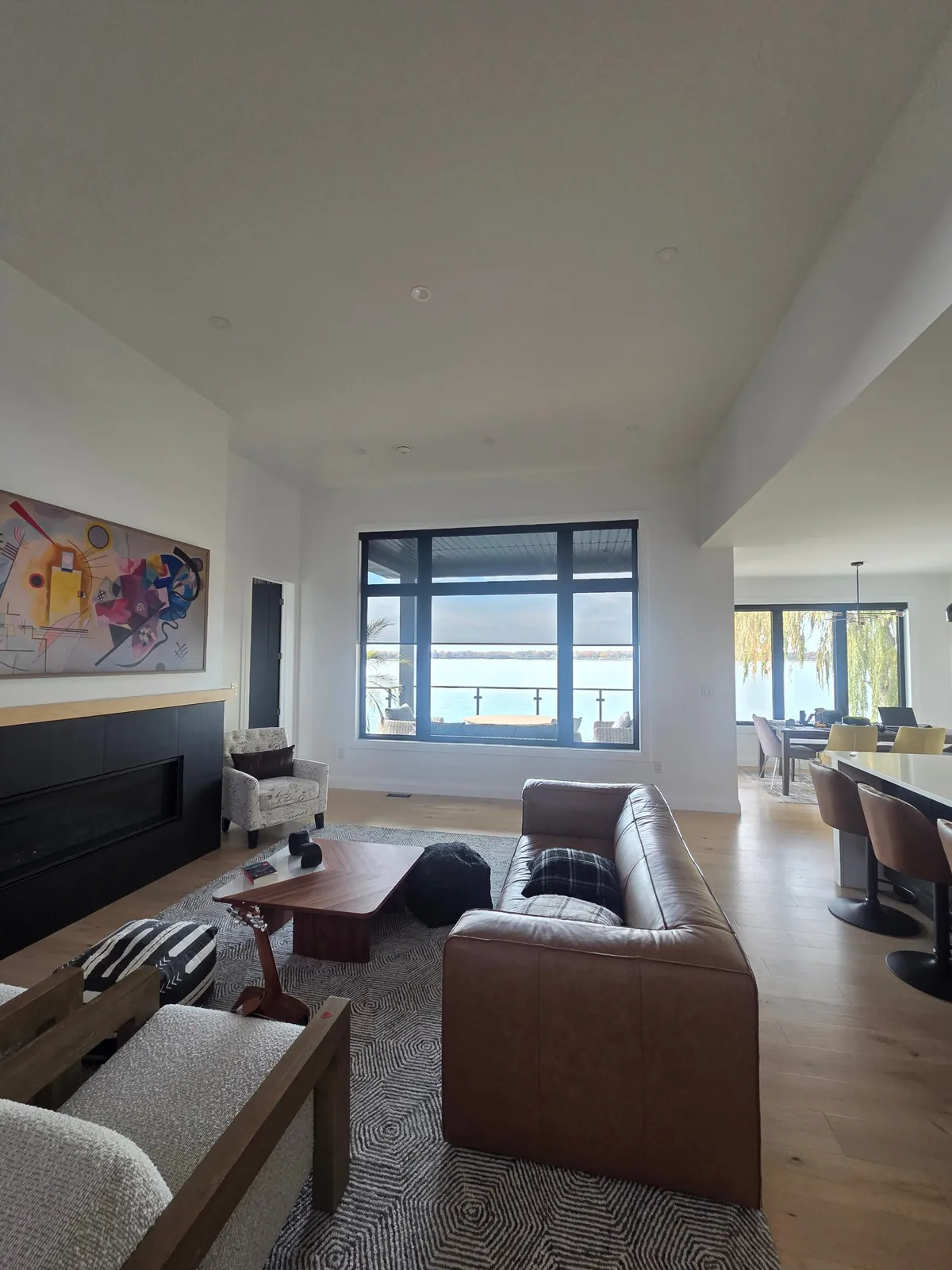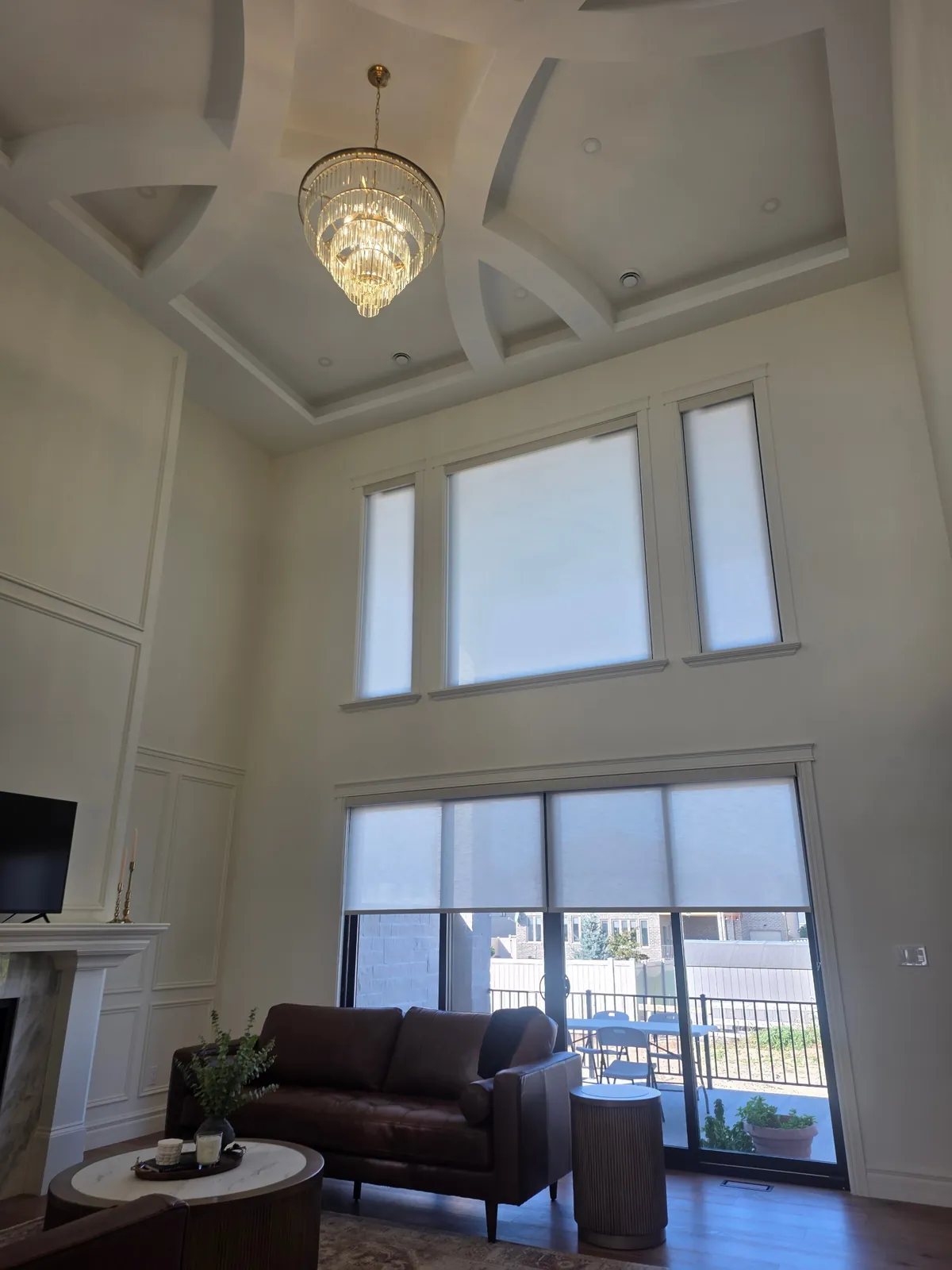
Shades for South- and West-Facing Windows: Heat, Glare and Fading
Which way a window faces tells you more about the right shade than almost anything else. South and west windows are where comfort problems start, and where good shades earn their keep.
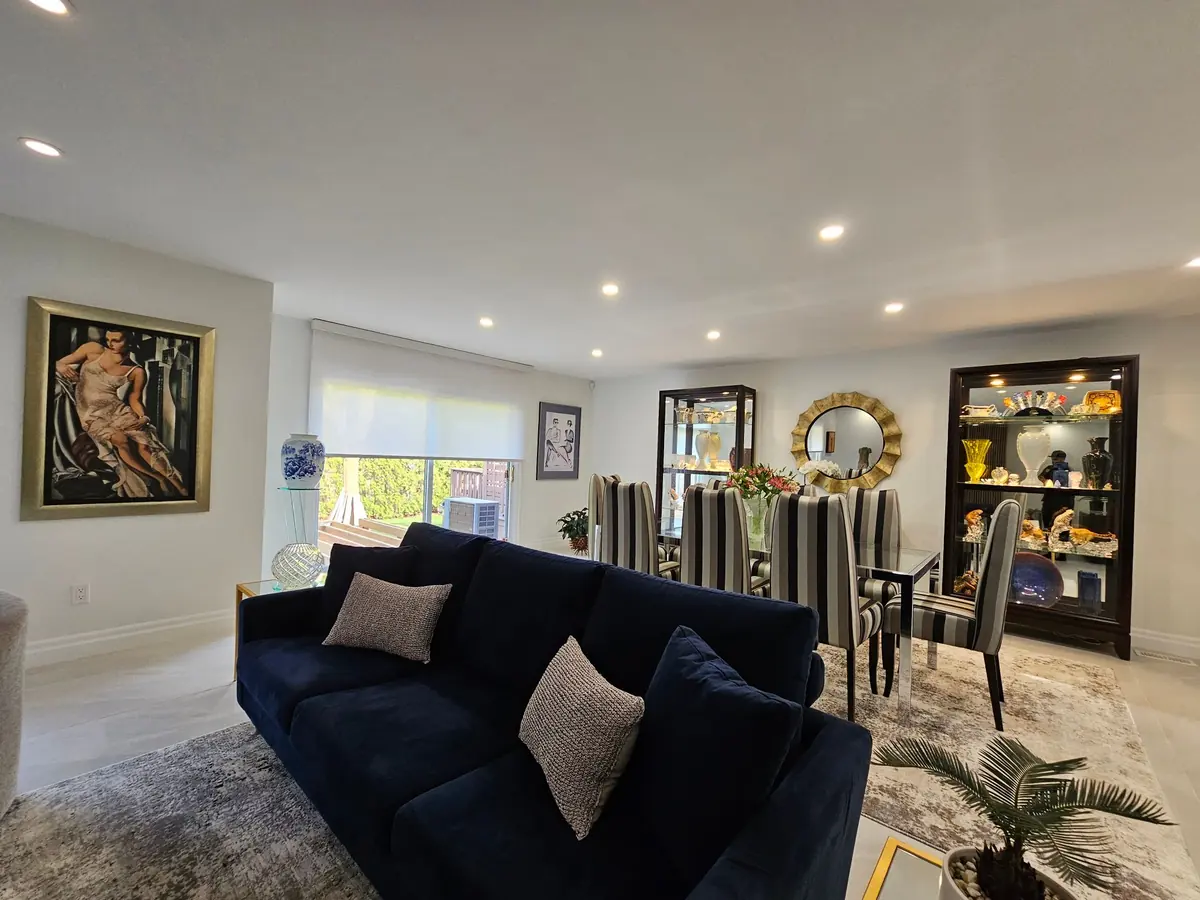
In short
- West windows take low, hot sun in the late afternoon; south windows get high summer sun and low winter glare.
- Screen shades at 1% to 3% openness cut heat, glare and UV while keeping the view.
- Light fabrics reflect more heat; dark fabrics give the clearest view and least glare.
- Motorized schedules lower shades before a room overheats.
On this page
How the sun moves across your windows
- West: the problem window. Afternoon and evening sun sits low in the sky, comes straight in under roof overhangs and arrives at the hottest time of day, when the house has already warmed up.
- South: in summer the sun is high at midday, so overhangs shade much of the glass. In winter the sun is low and shines deep into the room, which is welcome warmth but strong glare.
- East: bright, early morning sun. Great in kitchens, less great in bedrooms.
- North: soft, even light all day. Rarely a heat problem.
Cutting the heat
- Screen shades block a large share of the sun's heat while keeping the view. Lower openness (1%) blocks more.
- Light-coloured fabrics, or fabrics with a white back, reflect more heat back out through the glass.
- Honeycomb shades add insulation as well as shade. See honeycomb shades.
- Timing is everything. A shade lowered before the sun hits the glass keeps the room cooler than one lowered after the room is already hot.
Cutting the glare
Glare is about contrast: a bright window next to a darker room, or sunlight across a TV or monitor. Darker screen fabrics cut glare best and give the clearest view out, much like sunglasses. In rooms with screens, see the best blinds for a home office.
Protecting floors and furniture
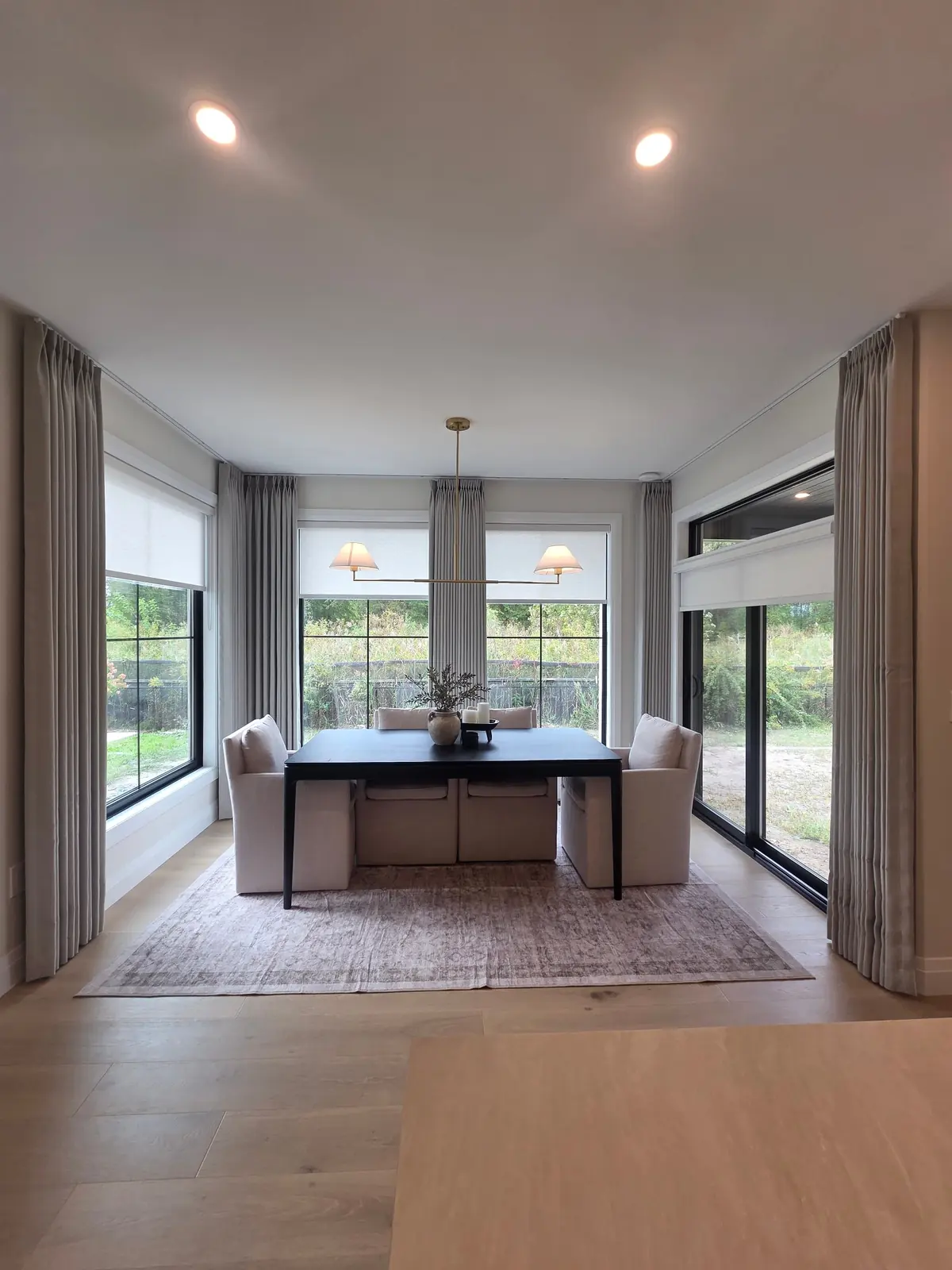
Ultraviolet light fades hardwood floors, rugs, upholstery and art, and south and west windows deliver the most of it. A screen fabric blocks roughly as much UV as its openness factor suggests: a 3% screen blocks about 97%, a 1% screen about 99%. Lowering shades during the strongest hours protects the room without closing it off. No interior shade stops fading completely, but the difference over a few years is easy to see.
Let automation do it
Motorized shades are at their most useful on west and south windows:
- Lower west-facing shades at 2 p.m. from June to September.
- Raise them again at sunset to enjoy the evening light.
- Close south-facing shades at night in winter to hold the heat in, and open them on sunny mornings.
Some systems can follow sunrise and sunset automatically or react to a light sensor. See smart blinds at home.
Winter: let the sun work for you
On sunny winter days, open south-facing shades and let the low sun warm the room for free, then close them at dusk to keep the heat in. A good shade isn't only about blocking sun; it is about choosing when to let it in.
Our usual picks by direction
| Direction | First choice | Also works |
|---|---|---|
| West | Screen shade, 1% to 3%, motorized | Honeycomb, layered drapery |
| South | Screen shade, 3% | Zebra blinds, honeycomb |
| East | Light-filtering or zebra; blackout in bedrooms | Screen shade |
| North | Zebra blinds, sheers or light-filtering | Anything you like the look of |
A simple summer schedule
For a west-facing living room in Windsor-Essex, a schedule like this works well from June to September:
- Morning: shades open.
- 2 p.m.: west shades lower about two-thirds of the way.
- 4 p.m.: west shades fully down.
- Sunset: shades rise again for the evening light.
With our smart motors (2 Nm of torque) the schedule runs on its own, every day. Every motor and its programming is covered by our full 3-year in-house warranty.
Common questions
Which colour screen shade keeps a room coolest?
Lighter colours, or fabrics with a white back, reflect more heat. Darker colours give a clearer view and less glare. Choose by which is more important in that room.
Do interior shades really reduce heat?
Yes, when they are lowered before the sun hits the glass. They work best on west and south windows, and honeycomb shades also insulate.
Will shades stop my floors fading?
They slow fading a lot by blocking most UV, especially screen fabrics at 1% to 3% openness. No interior shade stops it completely.
Do motorized shades really save energy?
They help most by being lowered at the right time every day, which few people manage by hand. Lowering west and south shades before the sun hits the glass keeps rooms cooler and eases the load on your air conditioning.