Blinds for New Homes in Windsor-Essex: When to Measure and What Works
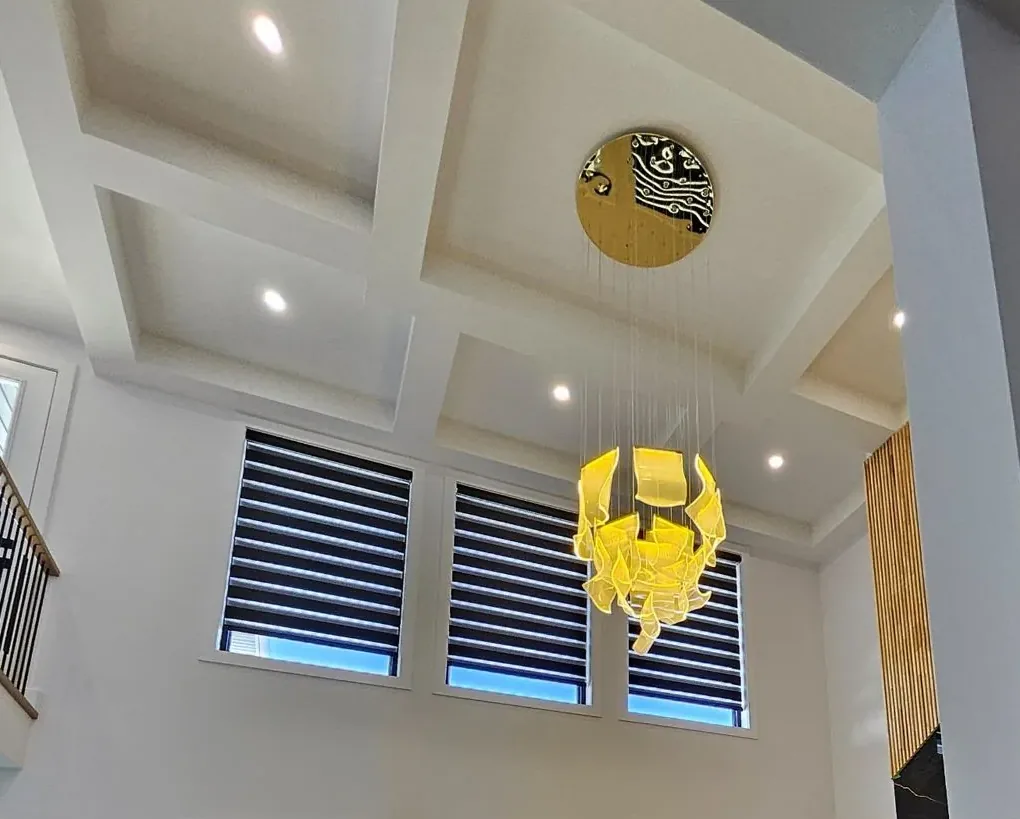
New homes around Windsor have more glass than older ones: two-storey great rooms, arched transoms, wide patio doors. Planning the window coverings early saves money and a lot of ladder work.
In short
- Plan any hardwired motors before drywall. Book the final measure after trim and paint.
- Two-storey and open-to-above windows are best motorized and grouped.
- Check frame depth before choosing an inside mount; many new windows are shallow.
- You can phase the work: bedrooms first, the rest when the budget allows.
On this page
Two key dates
- Before drywall: decide which windows, if any, will have hardwired motorized shades. Usually that's the tall great-room windows, the media room and long runs of glass. Low-voltage cable and wood blocking for brackets go in at this stage, and it costs far less now than after the walls are closed. See pre-wiring for motorized shades.
- After trim and paint: book the final measure. Window trim changes the inside dimensions, so we measure once it's in. Every blind is then made to those measurements.
Plenty of people move in with the builder's temporary paper shades and replace them room by room. That's fine, as long as the wiring decision was made in time.
Typical new-build windows and what works
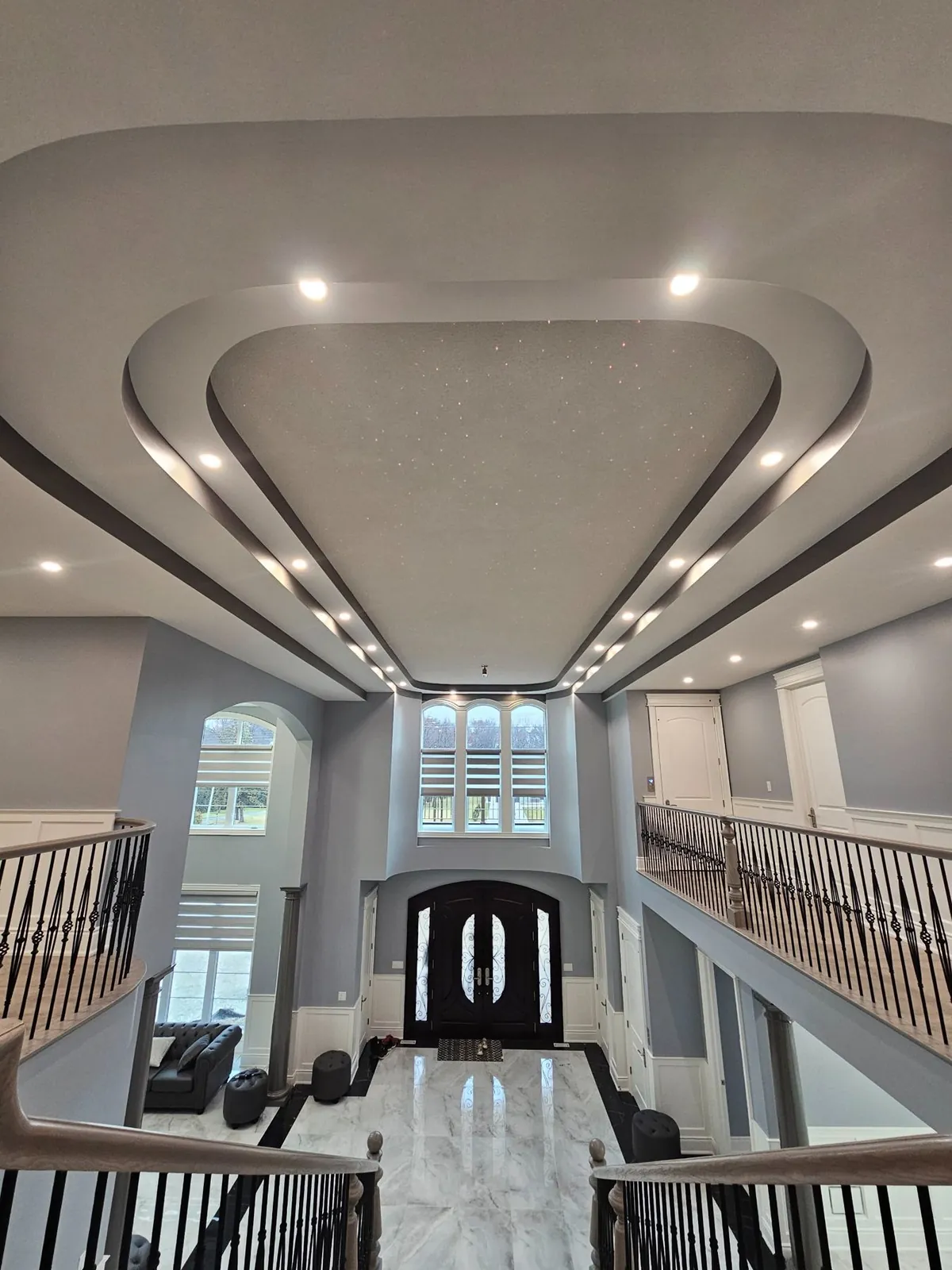
- Two-storey great rooms and open-to-above windows: motorized shades, grouped so the upper and lower rows move together, with matching bottom lines. See arched, tall and two-storey windows.
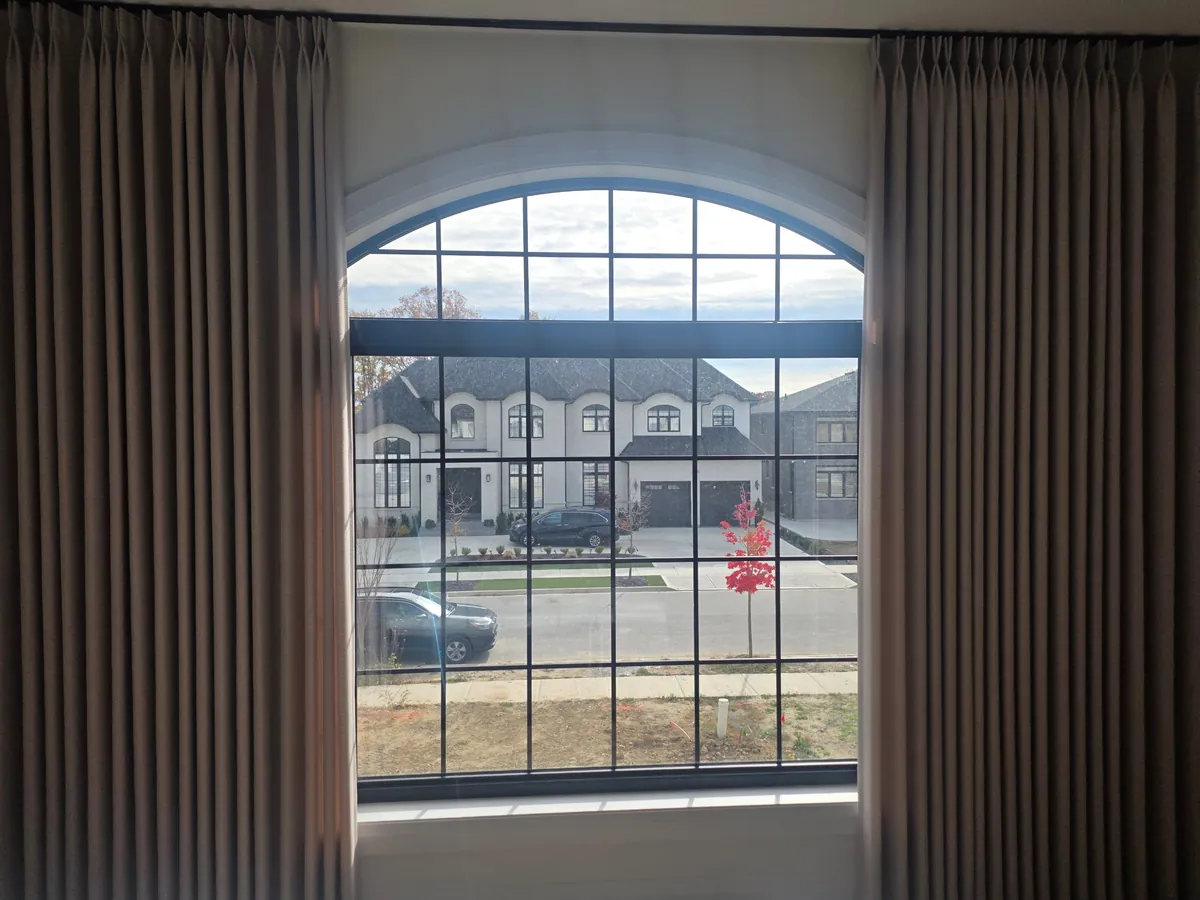
- Arched and half-round transoms: leave the arch open and cover the rectangle below, or frame the whole window with drapery.
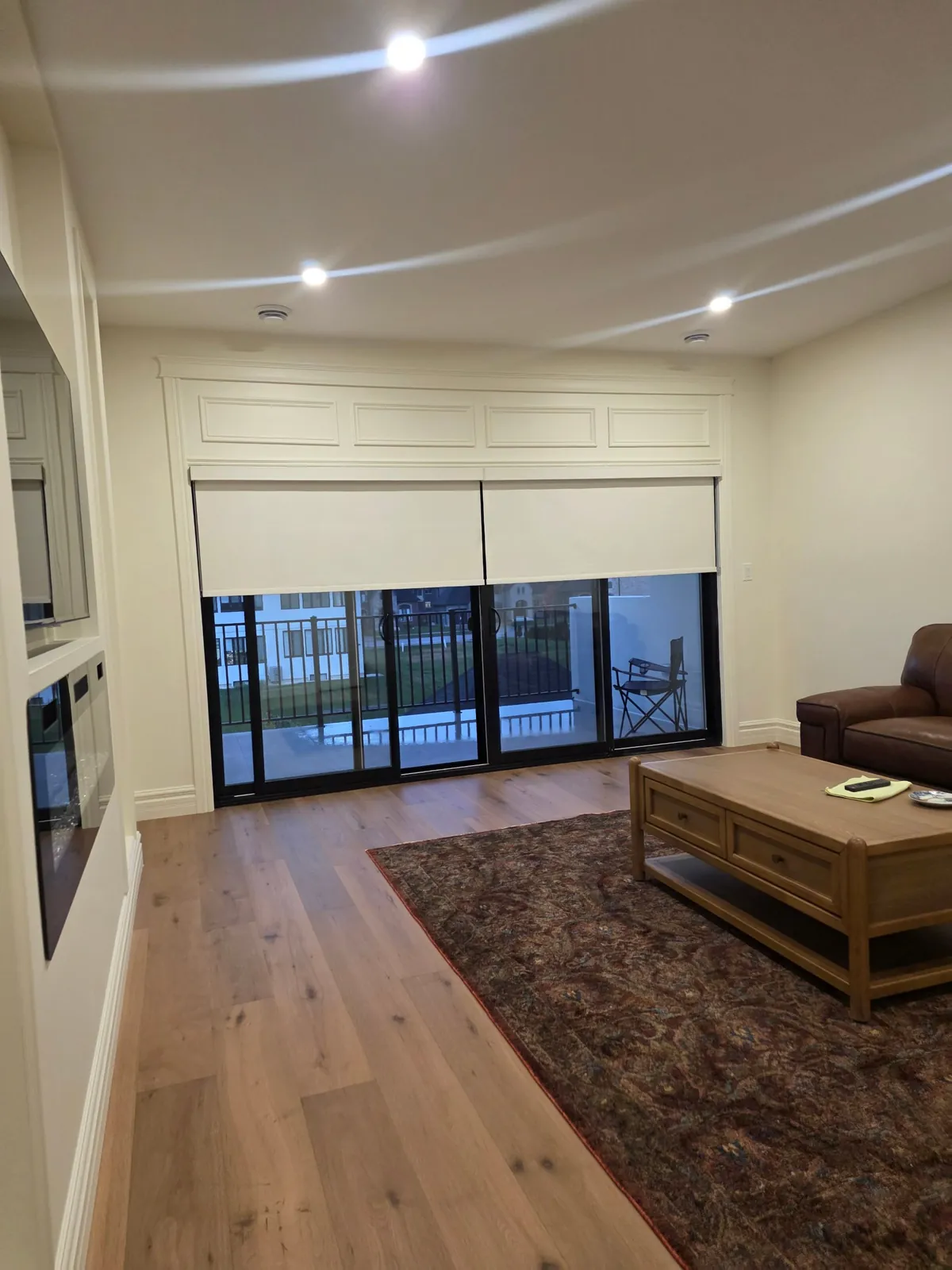
- Wide sliding patio doors: two roller shades side by side, vertical sheers or drapery on a track. See patio door blinds.
- Corner windows: shades that meet neatly at the corner, with cassettes cut to line up.
- Basement windows: cordless roller or honeycomb shades that fit small, deep openings.
Check the frame depth
New windows often have a shallow return, the depth of the opening inside the trim. Cassettes and some headrails need a minimum depth to mount inside the frame. If yours is shallow, an outside mount above the window or a slimmer bracket solves it. We measure the depth of every window during the visit so there are no surprises on install day.
Builder packages or custom?
Some builders offer a blinds package. Compare it the way you'd compare any quote: whether each blind is made to the exact window, the fabric and colour choices, whether motorization is available, and who you call if something needs adjusting later. Our custom vs. store-bought guide lists what to check.
Phasing to suit your budget
Moving into a new house is expensive. If you'd rather spread the cost, do it in stages:
- Bedrooms, bathrooms and street-facing rooms, for privacy and sleep.
- Main living areas, including the great room and patio door.
- Everything else, such as the basement, office and laundry.
Choose one product family and one cassette colour at the start so every phase matches.
A sample plan for a two-storey new build
| Room | What we usually suggest |
|---|---|
| Great room, two-storey windows | Motorized roller or zebra shades, grouped, low-voltage if pre-wired |
| Kitchen and breakfast area | Zebra blinds or screen roller shades |
| Patio door | Two roller shades side by side, or vertical sheers |
| Primary bedroom | Blackout roller shades, plus drapery for softness |
| Kids' bedrooms | Cordless or motorized blackout shades |
| Bathrooms and ensuite | Top-down/bottom-up or light-filtering roller shades |
| Basement | Cordless roller or honeycomb shades |
Motorized from day one
A new build is the easiest time to go motorized. With low-voltage wiring in the walls, shades connect directly to whole-home systems such as Control4, and there are never batteries to charge on high windows. Where the walls are already closed, our smart motors with 2 Nm of torque give the same app and voice control without wiring. Every motor and its programming is covered by our full 3-year in-house warranty.
Local notes
LaSalle and Amherstburg sit along the Detroit River, so river-facing glass takes the afternoon and evening sun; screen shades are the usual answer. Tecumseh and Lakeshore homes near Lake St. Clair look north over the water and catch summer sunsets on the west side. Each town has its own guide: LaSalle, Tecumseh, Lakeshore and Belle River, Amherstburg, Essex and Harrow, Kingsville and Leamington.
Common questions
When should we book the measure for a new home?
Once the window trim is installed and painted. If you want hardwired motorized shades, talk to us before drywall so the wiring can go in.
Can you install before we move in?
Yes, as long as we can get into the house. Many clients schedule installation between possession and moving day.
Do we need blinds on every window right away?
No. Start with bedrooms, bathrooms and street-facing rooms, and add the rest later in the same product family so everything matches.
Is it worth pre-wiring even if we buy shades later?
Yes. Running low-voltage cable before drywall costs far less than adding it later, and the windows are ready whenever you are.