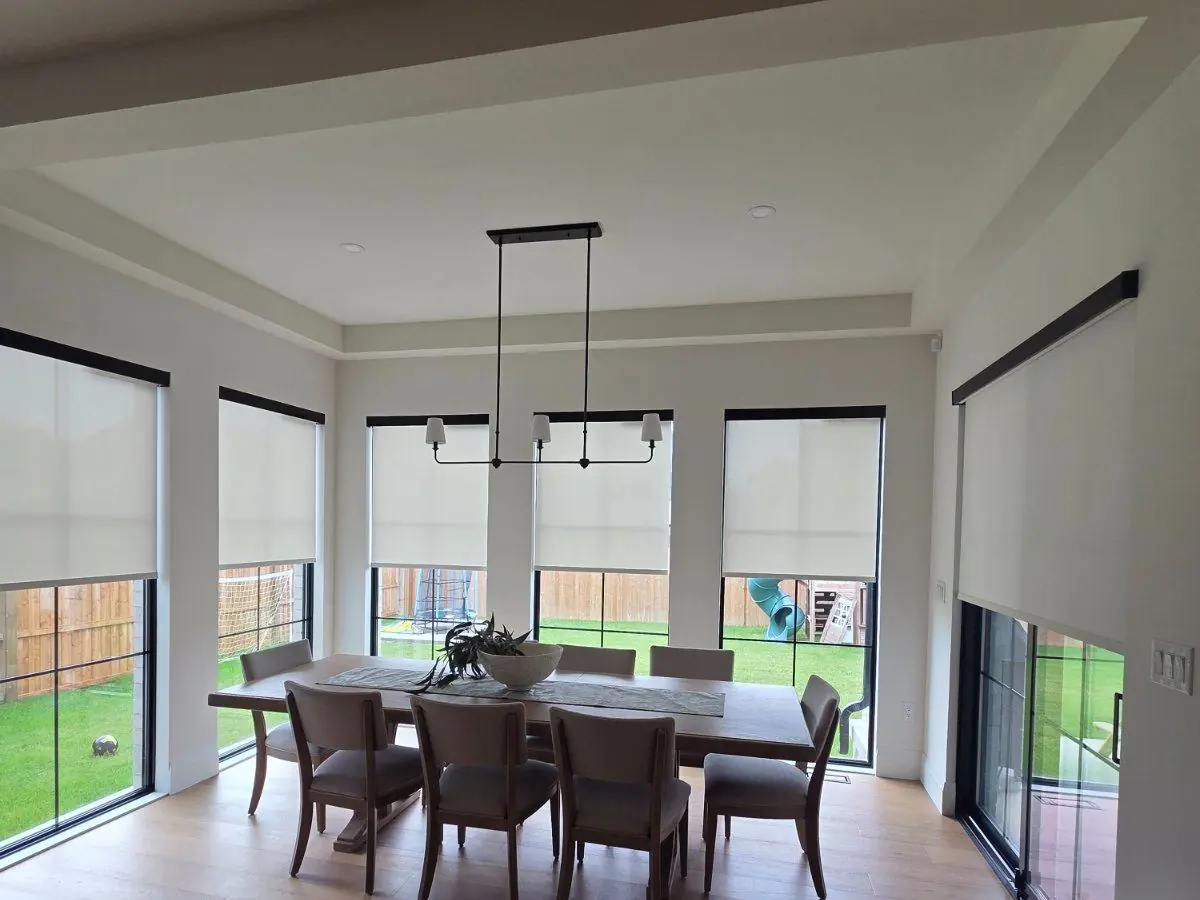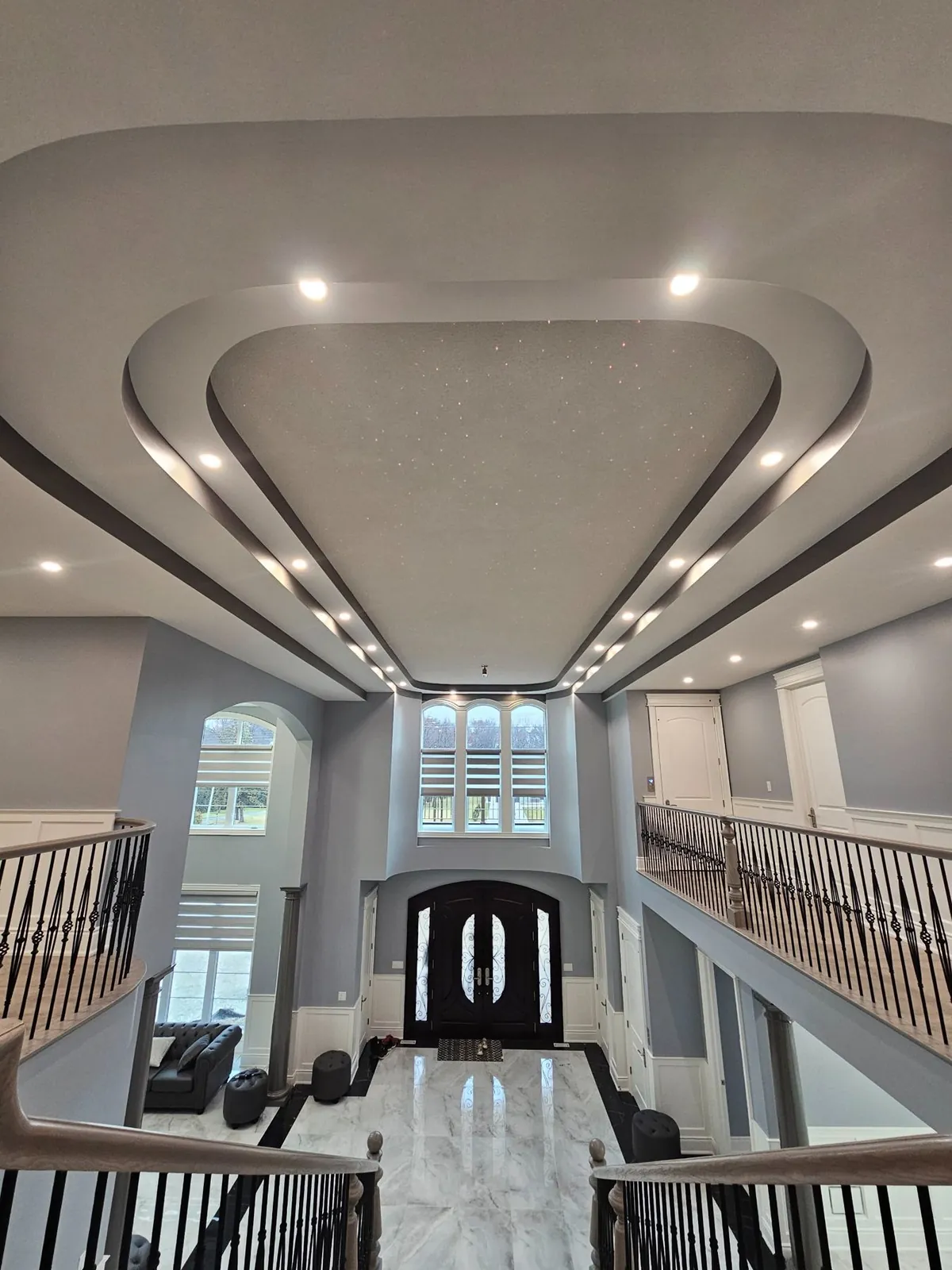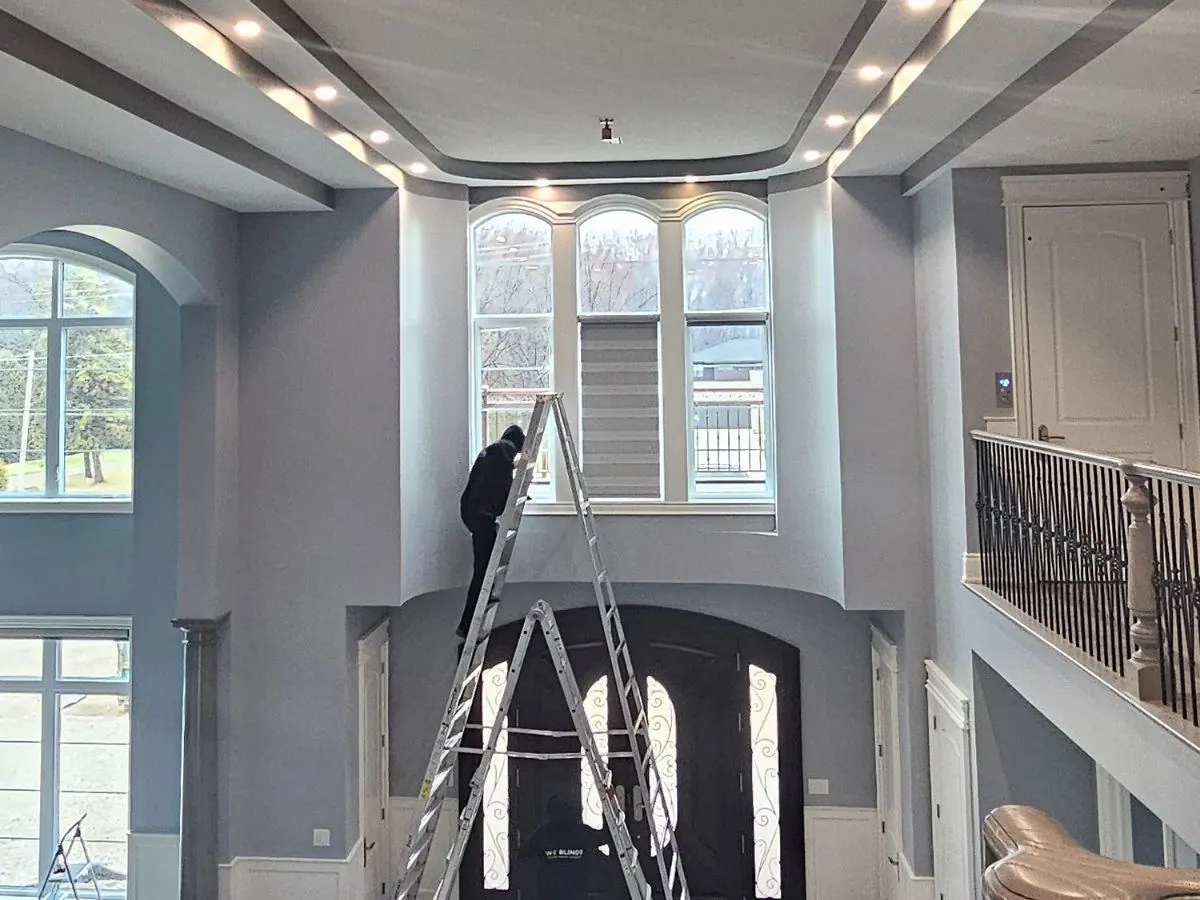
Pre-Wiring for Motorized Shades: A Guide for New Builds and Renovations
Hardwired motorized shades are the most reliable kind, and the cheapest time to get them is before the drywall goes up. Here's what to plan, and when.
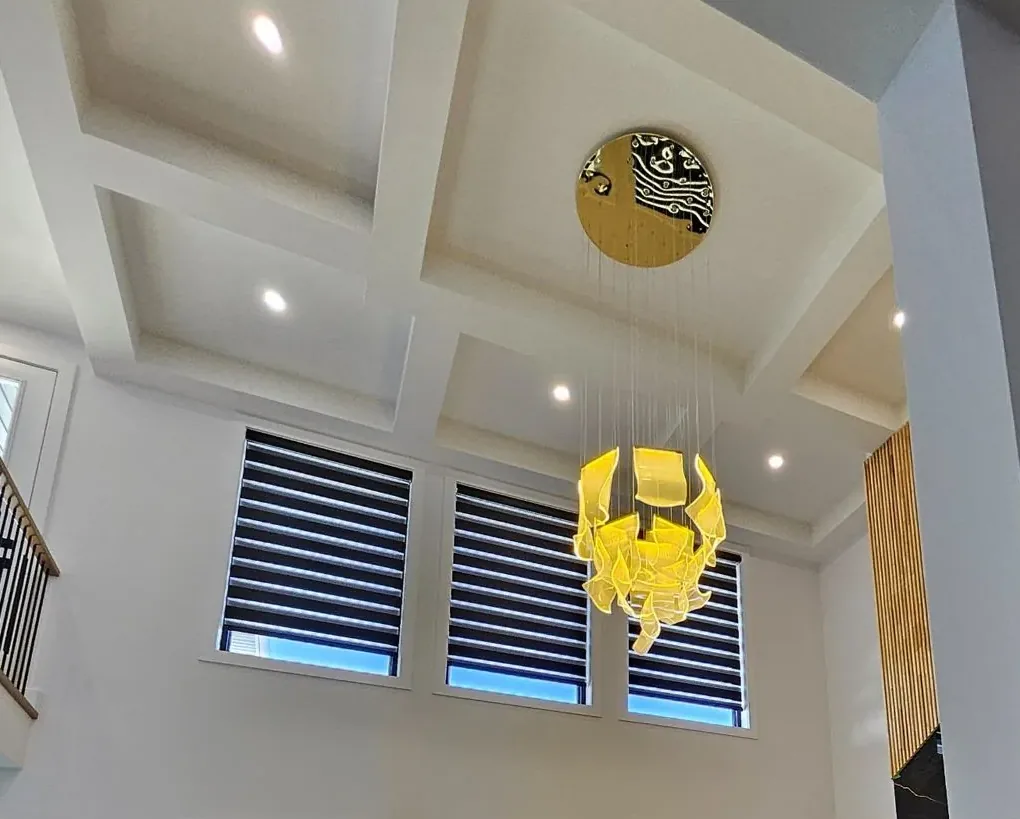
In short
- Plan the wiring at the framing stage, before insulation and drywall.
- Run low-voltage cable to the top corner of each window, on the side the motor will sit.
- Add wood blocking above windows for brackets and curtain tracks.
- Coordinate the shade plan with your electrician and any smart home integrator.
On this page
Why pre-wire at all
Hardwired low-voltage motors never need charging, handle the largest and heaviest shades, run long walls of glass in perfect sync and connect directly to whole-home systems such as Control4, Crestron and Savant. With the wires hidden in the walls, there is nothing to see but the shade. The only catch is that the wiring has to get to each window, which is easy with open walls and hard without them.
When to do it
At the framing or rough-in stage, before insulation and drywall. The best time to call us is while the electrician is planning the low-voltage rough-in. We walk the house with you, mark the windows to be motorized and confirm which side each motor will sit on. Take photos of every wall before it is closed; they are invaluable later.
Where the wire goes
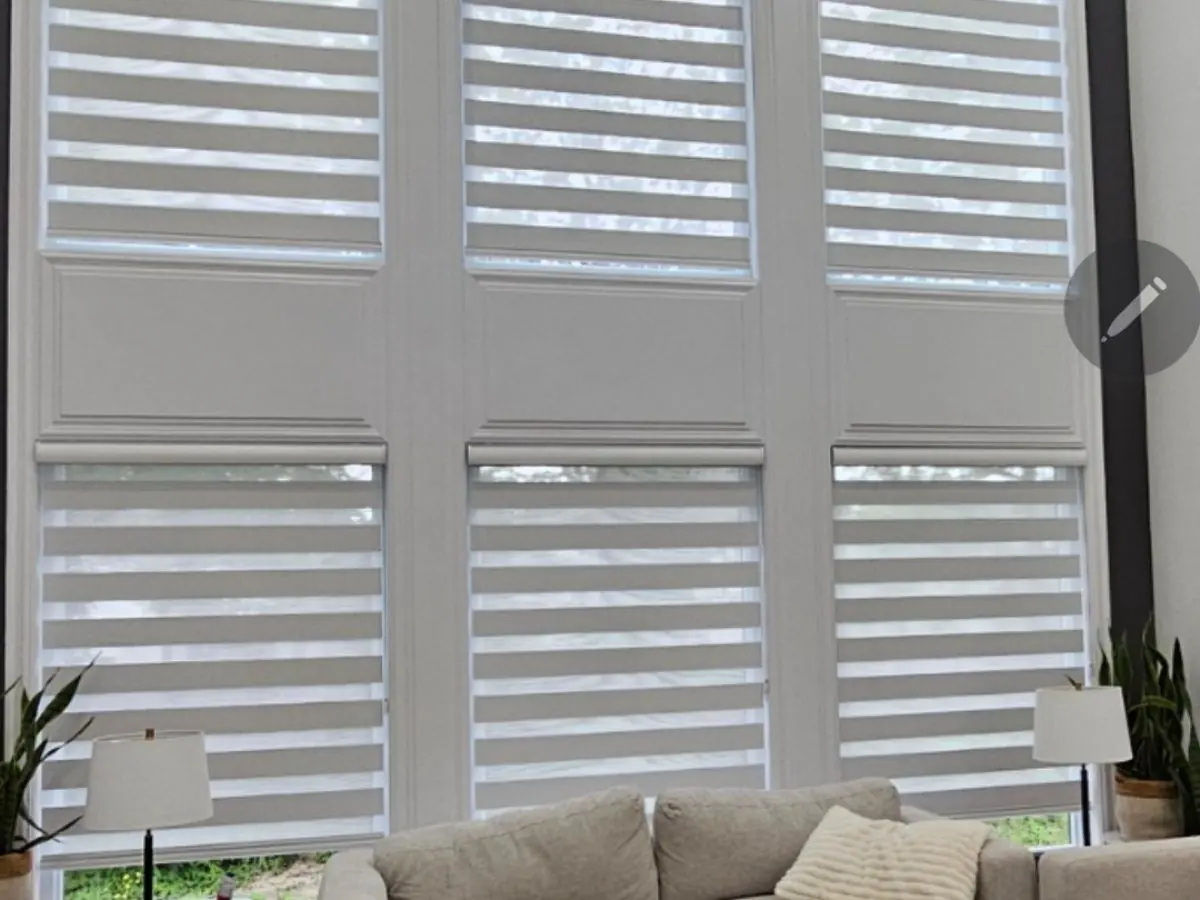
- Roller and zebra shades: to the top corner of the window opening on the motor side, with extra cable left coiled so it can reach the motor wherever the bracket ends up.
- Shades in a ceiling pocket: if you want shades to disappear into a recess in the ceiling, frame the pocket now and run the wire into it.
- Motorized curtain tracks: to the end of the track where the motor sits, at ceiling height.
- Keypads and switches: wall boxes wherever you want buttons, usually by doorways and beside the bed.
What kind of wire
The exact cable depends on the motor system you choose; we give your electrician the specification for it. Most low-voltage shade systems use stranded low-voltage cable from a central power supply or from local power supplies near groups of windows. Plan a place for the power supply, usually in a mechanical room or a closet, with an outlet nearby.
Blocking: the step everyone forgets
Ask your builder to add solid wood blocking above every window that will have a shade, and in the ceiling wherever a curtain track or recessed pocket will go. Brackets for large shades, double brackets and curtain tracks need to screw into solid wood, not just drywall.
Coordinate the team
Window coverings touch several trades. Share one window schedule, a simple list of every window with its size, product, motor side and how it will be controlled, with:
- the builder or general contractor,
- the electrician,
- the smart home integrator, if you have one,
- and us.
Renovations in finished homes
If the walls are already closed, we can sometimes fish low-voltage cable to the windows through attics, basements or neighbouring closets. Where we can't, battery and solar motors give you the same control with no wiring at all. See solar, battery or hardwired.
Control4, Crestron and Savant projects
If a whole-home system is part of the build, bring us in at the same time as your integrator. We agree on the shade system, the motor side and cable for each window, and where interfaces and power supplies will live. Then we install and program the shades, and your integrator adds them to keypads and scenes. See Control4 motorized shades.
Covered for three years
Every motor and its programming is covered by our full 3-year in-house warranty. That applies to hardwired and wireless motors alike.
Checklist before drywall
- Decide which windows and tracks will be motorized.
- Confirm the motor side for each window.
- Run cable to each window head and each track end, with slack left coiled.
- Add blocking above windows and in ceilings for tracks.
- Place keypads and the power supply.
- Label every cable and photograph every wall.
Common questions
How much extra cable should be left at each window?
Leave a generous coil so the cable can reach the motor wherever we mount the bracket. We give your electrician the length for the system you choose.
Can we pre-wire now and buy shades later?
Yes, and it is very common. Label and cap the cables, photograph the walls, and the windows are ready whenever you are.
Do we need a smart home system to use hardwired shades?
No. Hardwired shades work with remotes, wall switches and an app on their own. You can add a smart home system later.
Who programs the shades in a Control4 home?
We install and program the shades themselves; your Control4 dealer adds them to the system’s keypads, touch screens and scenes. We coordinate directly with them.