How to Cover Arched, Tall and Two-Storey Windows
The windows that make a room dramatic are the hardest ones to cover. Arches, transoms and two-storey walls of glass each have a few good answers, and a few to avoid.
In short
- Most arches look best left open, with a shade covering the rectangle below.
- If you need darkness or privacy up high, drapery mounted above the arch covers everything.
- Two-storey windows should be motorized and grouped, with bottom lines that match.
- On high windows choose solar or hardwired motors, so nobody climbs a ladder to charge a battery.
On this page
Arched windows: three approaches
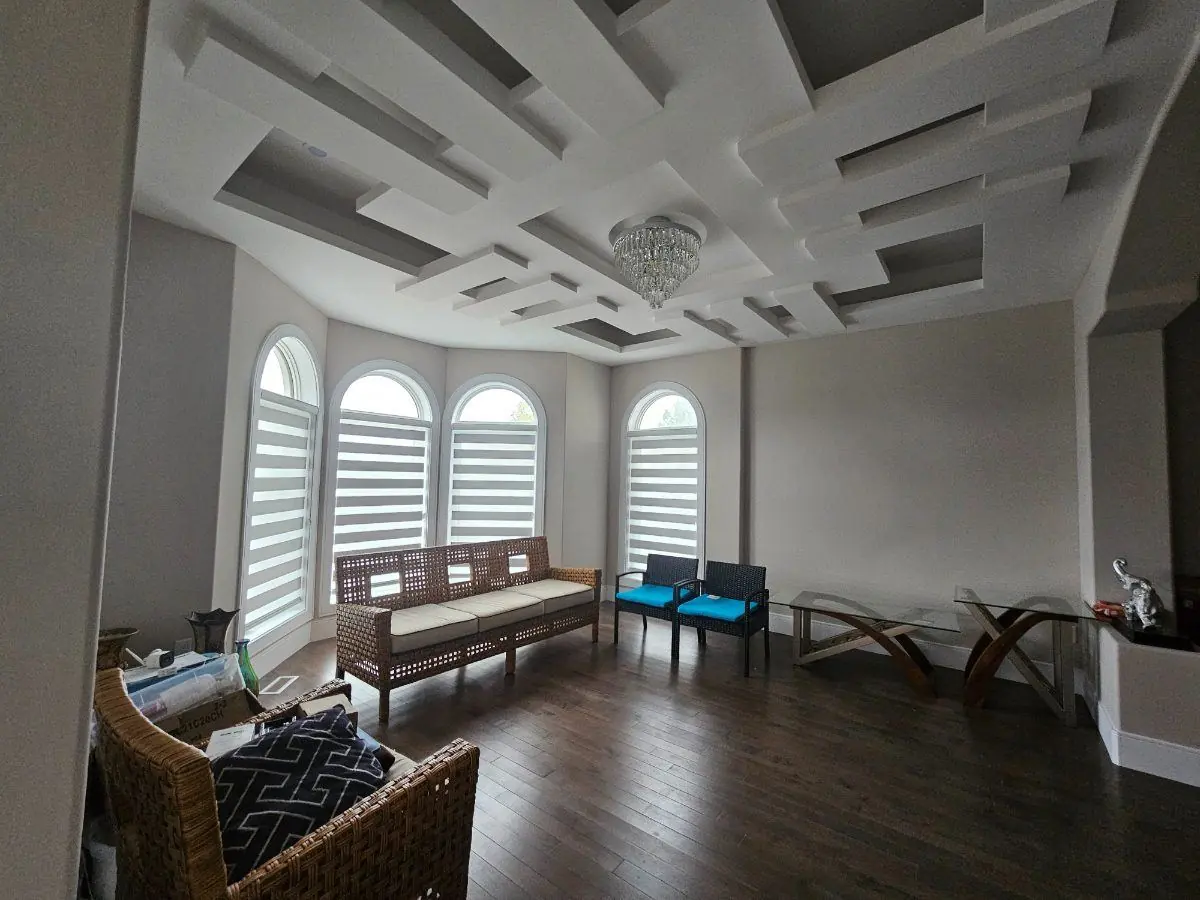
1. Leave the arch open. Mount the shade at the spring line, where the curve meets the straight sides, and cover only the rectangular part of the window. The arch keeps letting in light and stays the feature it was designed to be. This is what we do most often, and it suits roller shades, zebra blinds and honeycomb shades.
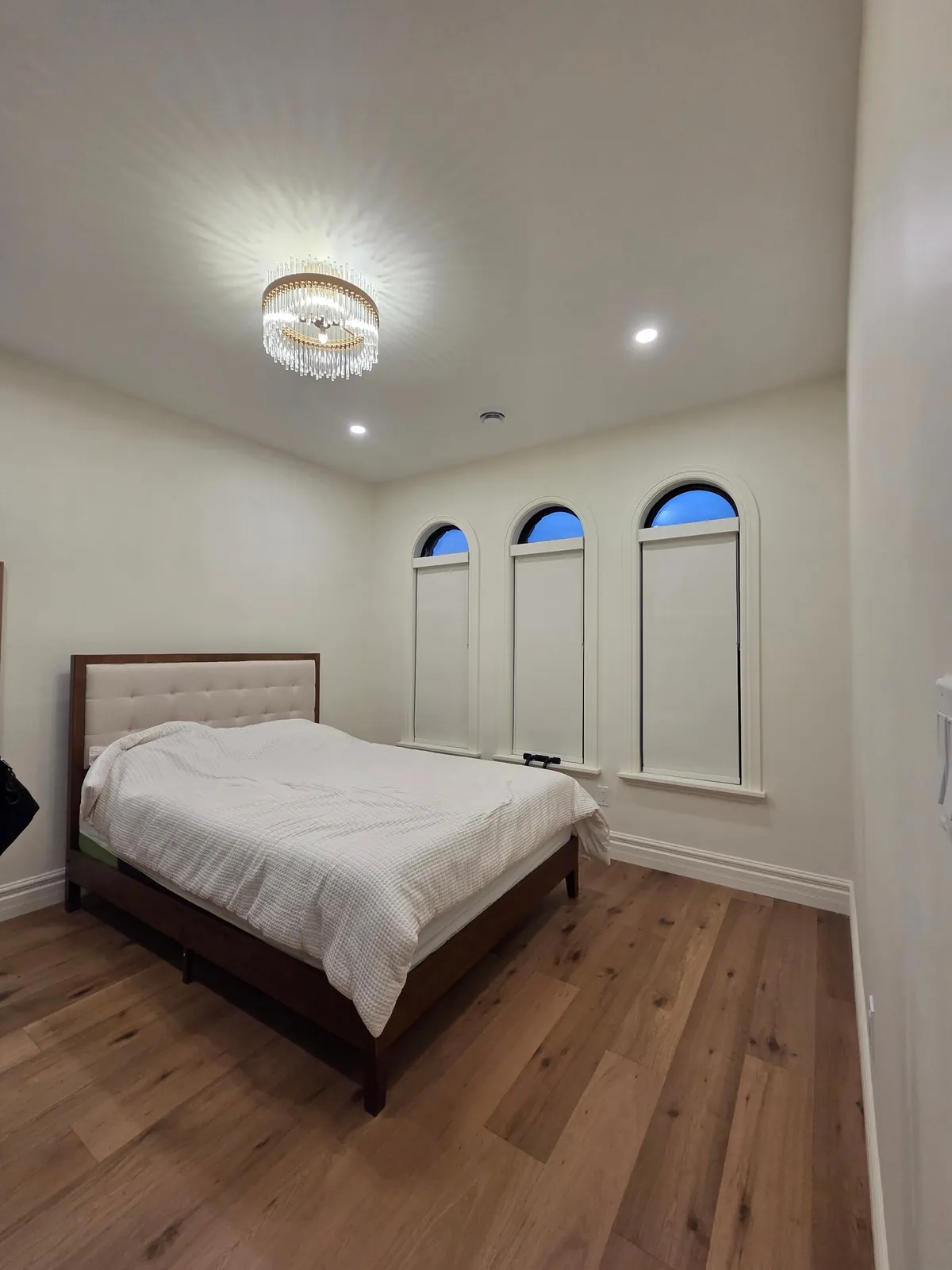
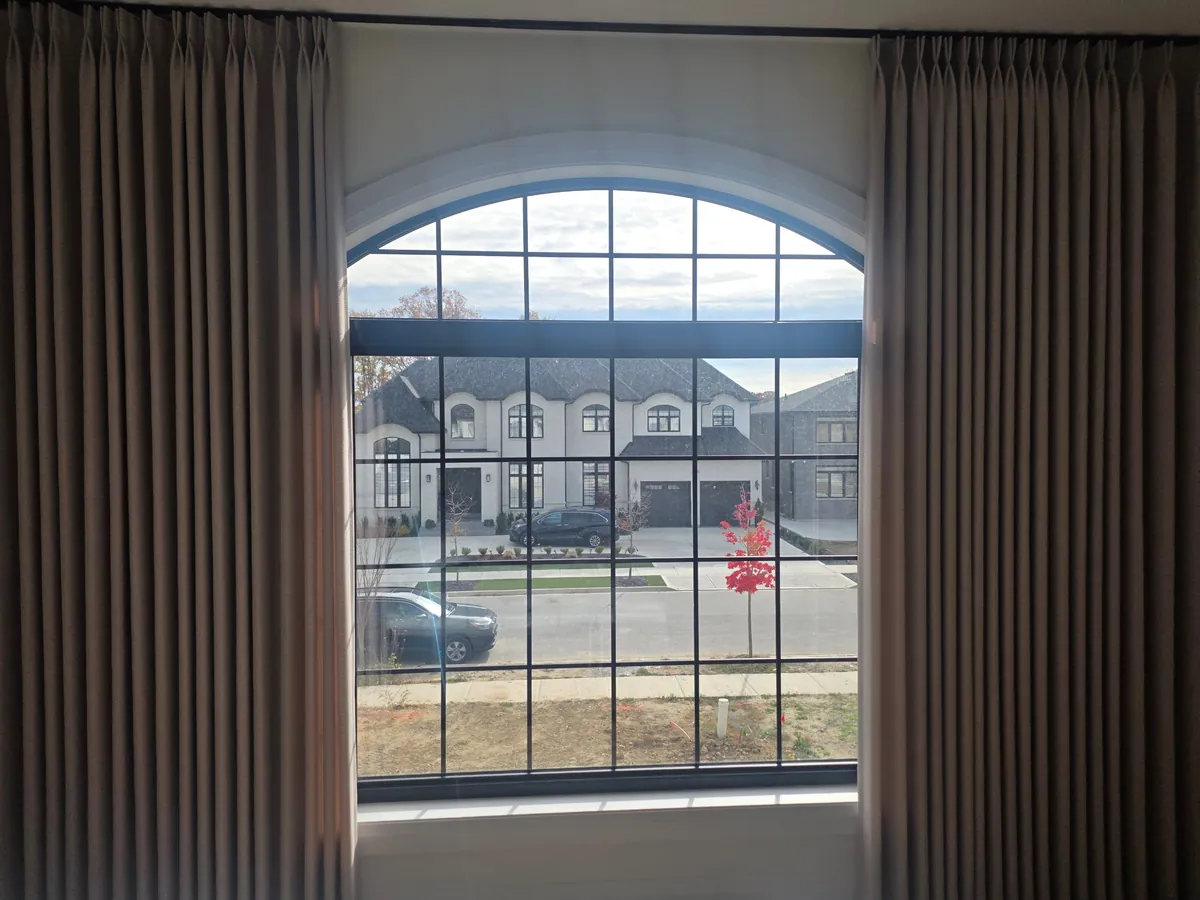
2. Frame it with drapery. Mount a track or rod above the top of the arch and let floor-length curtains frame the whole window. Open, they show off the arch; closed, they cover everything for privacy or darkness. Pair it with a shade below the arch, as in the photo at the top of this page, for day-to-day light control.
3. Cover the arch itself. Arch-shaped coverings exist, but they are fixed in place and don't open, and they cost more than the rest of the window put together. We only suggest them when an arch faces a neighbour's window or a bedroom has to be completely dark.
Transoms and half-rounds over doors
The glass above a front door or a patio door is usually best left uncovered. It lights the foyer and nobody can see in from that angle. If a transom lets morning sun straight into your eyes, cover the main window or door below instead.
Two-storey and open-to-above windows
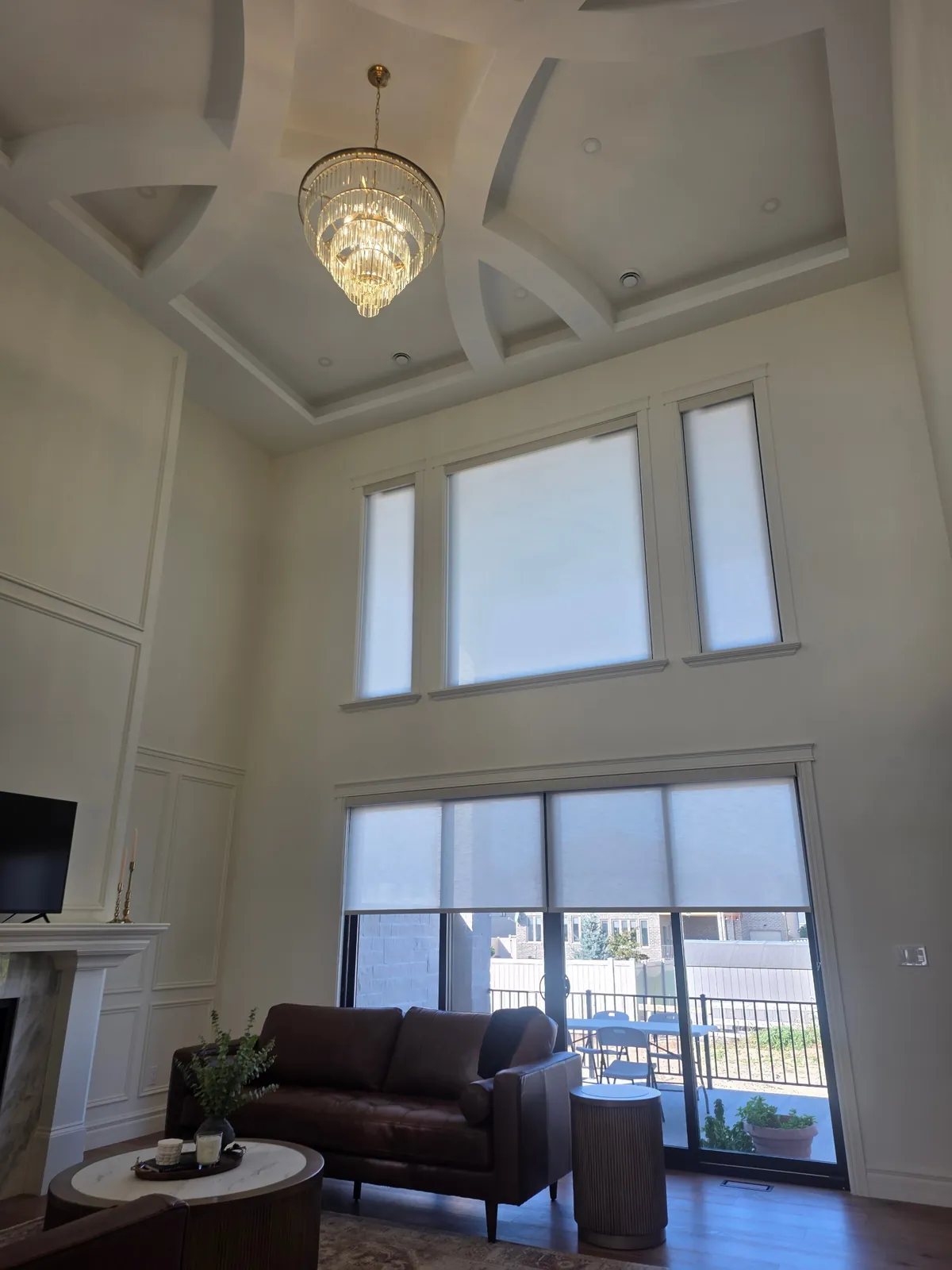
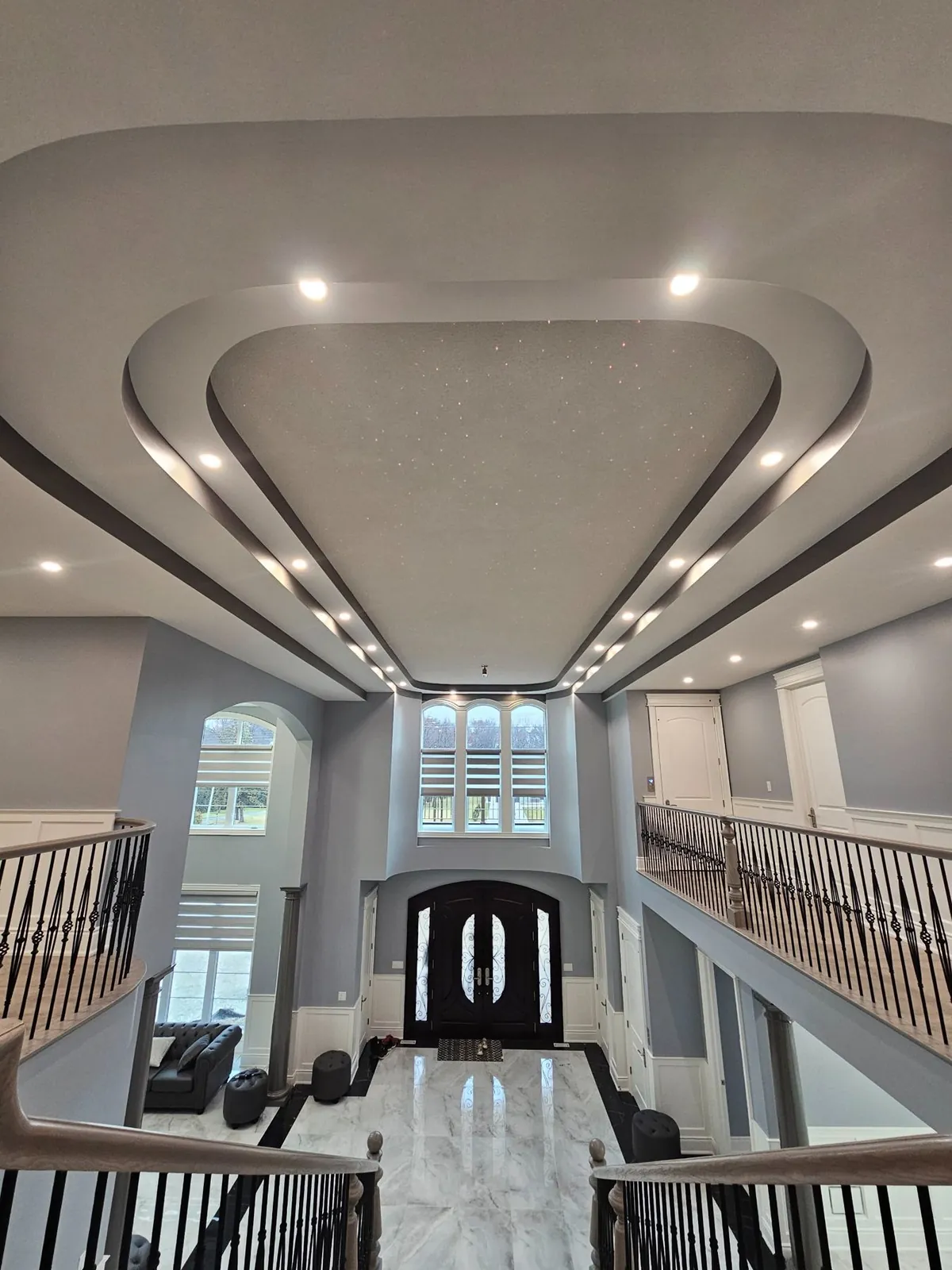
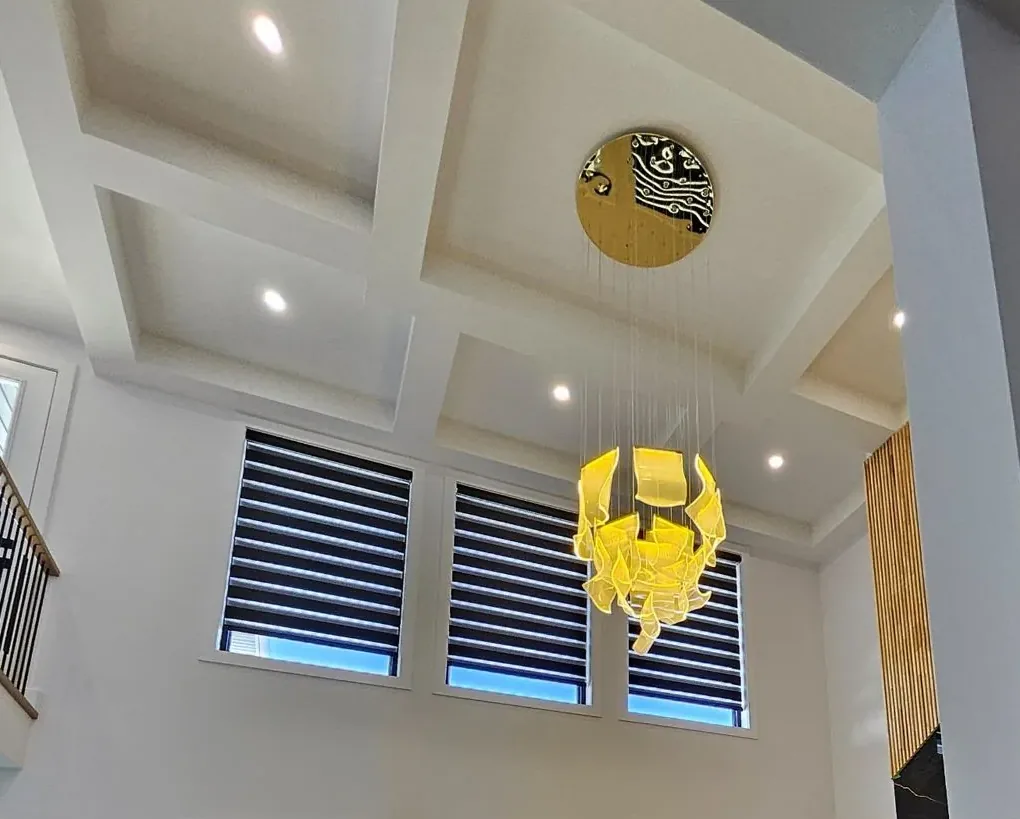
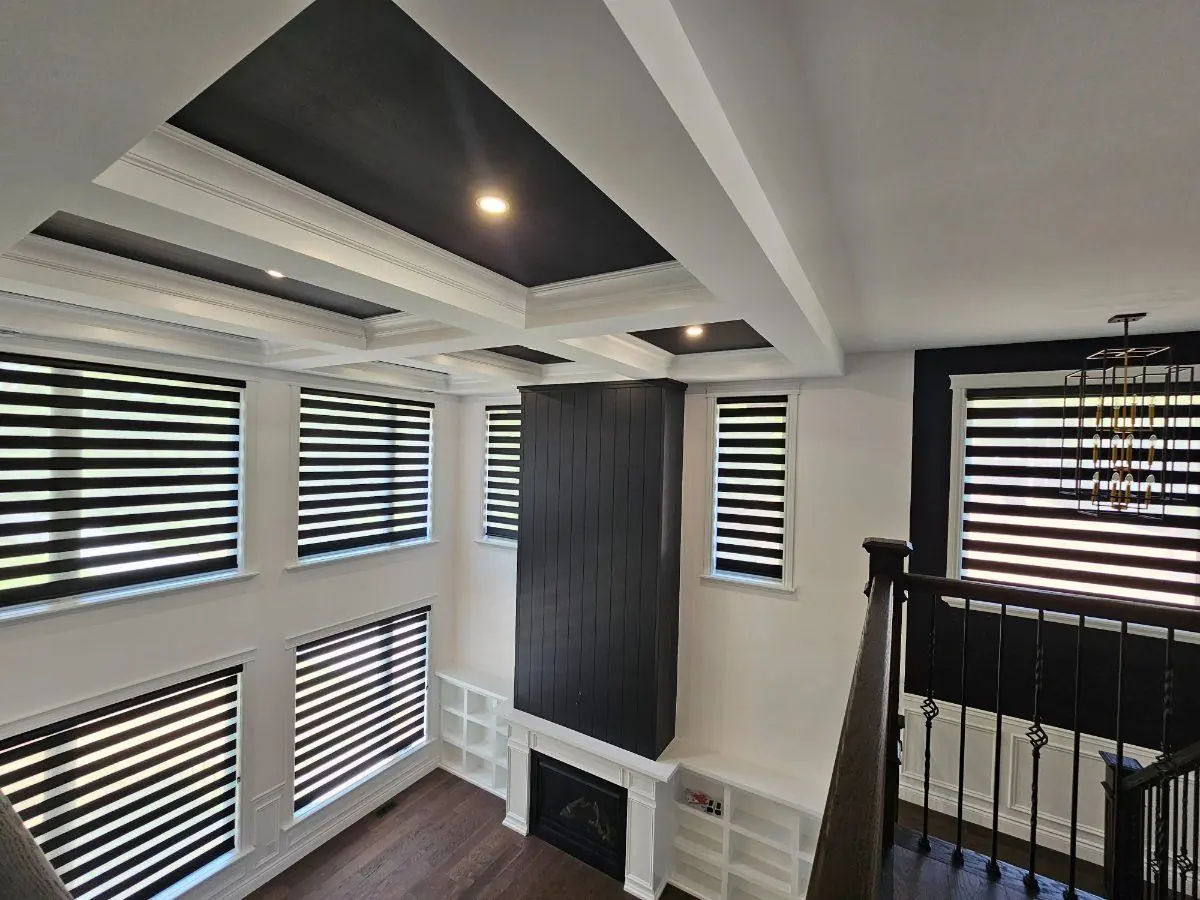
Great rooms and foyers with two rows of windows are where window coverings go wrong most often. A few rules:
- Motorize them. You can't reach the upper row, and poles and cranks are awkward and easy to lose. Motorized shades on one remote or scene solve it.
- Group by row and by wall. One button for the upper row, one for the lower, one for everything.
- Line up the bottoms. When shades are lowered partway, matching bottom lines make the wall look orderly. Motors with saved positions make this easy.
- Think about the sun. Upper windows send sun deep into the room, often onto a TV or seating. Lowering the upper row at the brightest time of day usually fixes the glare without darkening the room.
- Choose fabrics as a set. The same fabric on both rows, or a screen fabric up high and a privacy fabric at eye level.
Powering high windows
On windows you can't reach, avoid plain battery motors. Charging one means getting out a tall ladder. Solar motors keep themselves topped up on sunny high windows, and hardwired low-voltage motors never need charging at all. If you are building, plan the wiring before drywall: see pre-wiring for motorized shades.
Tall, narrow windows and sidelights
Sidelights beside a front door and narrow windows beside a staircase suit slim inside-mount roller or zebra shades. If they sit over a staircase or behind furniture, motorize them too.
Measuring and installing up high
Arched and two-storey windows need careful measuring (the spring line of an arch, the depth at every height) and safe access with the right ladders. It is a job we do every week, so leave it to us. See what to expect at the consultation.
Quick guide
| Window | Our usual approach |
|---|---|
| Arch over a window | Leave open; shade below the arch |
| Arch in a bedroom | Shade below plus drapery mounted above the arch |
| Two-storey wall | Motorized shades, grouped, solar or hardwired |
| Open-to-above | Motorized, upper row scheduled for afternoon glare |
| Transom over a door | Leave uncovered |
| Sidelights | Slim inside-mount roller or zebra shades |
Scenes for tall rooms
In two-storey rooms we usually set three scenes: Morning (everything open), Afternoon (upper row down to stop glare on the TV and seating) and Evening (lower row down for privacy, upper row open to the sky until dark). With our smart motors (2 Nm of torque) these run from Apple Home, Google Home, Alexa or SmartThings, or from a Control4 keypad in pre-wired homes. Every motor and its programming is covered by our full 3-year in-house warranty.
Common questions
Should I cover my arched window?
Usually not the arch itself. Cover the rectangular part below with a shade and leave the arch open for light. If the room has to be dark, add drapery mounted above the arch.
How do you clean shades on two-storey windows?
Lower them fully and dust with an extendable duster or a vacuum wand. Motorized shades make this easy because you can bring them all the way down.
Can battery motors work on high windows?
They work, but charging them means a ladder. Solar or hardwired motors are the better choice for windows you can’t reach.
Can the upper and lower rows be controlled separately?
Yes. We group shades by row and by wall, so you can move one row, one wall or everything together.