Sunroom Blinds and Shades: Taming Heat and Glare in a Room Made of Glass
A sunroom is wonderful in spring and fall and a challenge in July and January. The right shades make it a room you can use all year.
In short
- Screen shades cut glare and heat while keeping the garden in view.
- Honeycomb shades help four-season rooms hold heat in winter.
- Many windows in one room are easiest to manage with motors.
- Lower shades before the sun hits the glass for the coolest room.
On this page
Glass on three sides
Sunrooms take sun from several directions, so they heat up fast in summer, lose heat fast in winter, and fade floors and furniture all year. Glare can make reading or watching TV impossible on a bright afternoon. Covering a sunroom is about controlling all of that without losing the reason you built it: the light and the view.
Screen shades for heat and glare
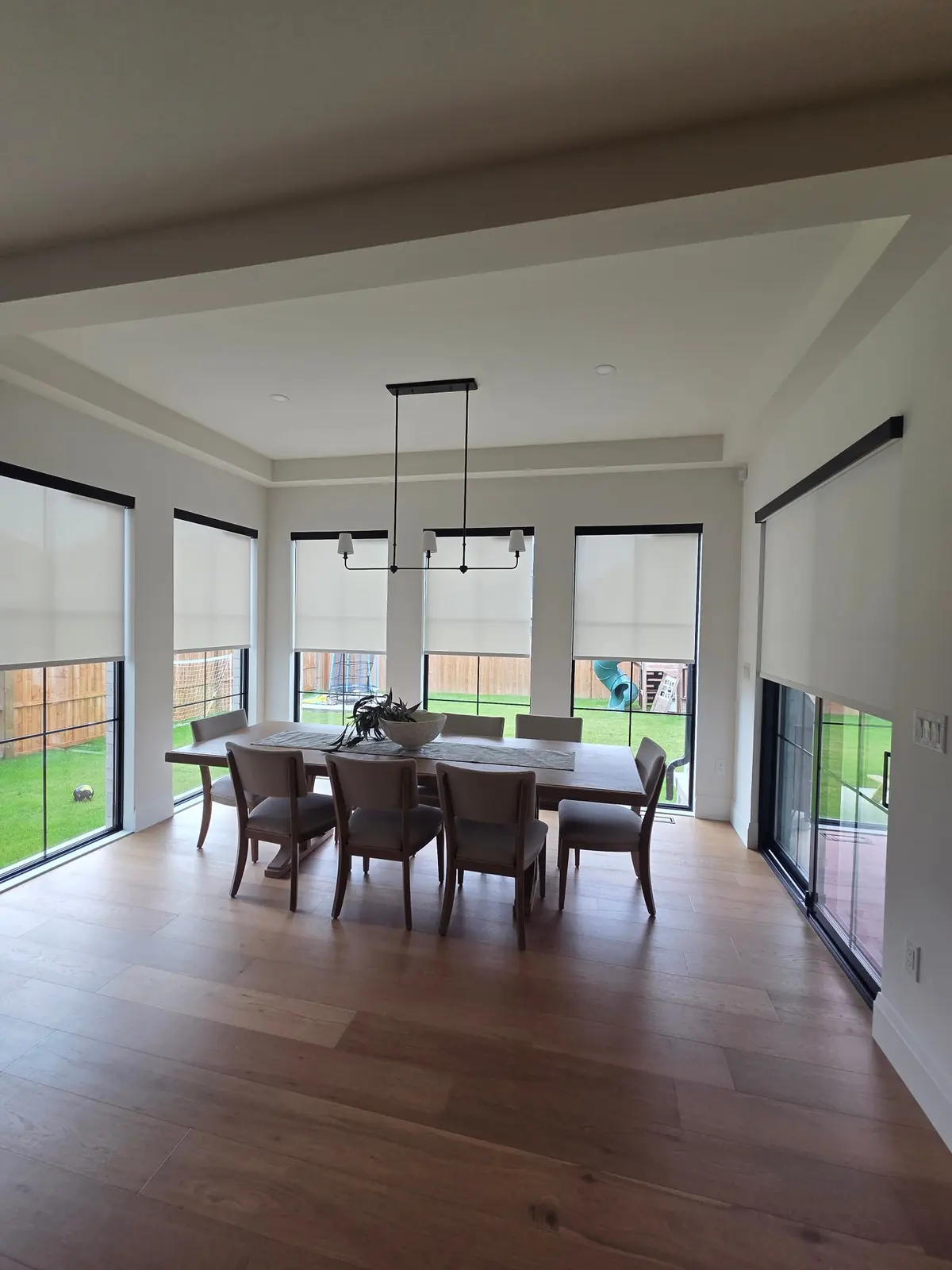
Screen shades are the workhorse of the sunroom. Their open weave cuts glare and a good share of the heat while keeping the yard in view. A 3% openness is the usual balance; 1% for the sunniest exposures. Darker colours give the clearest view; lighter colours reflect more heat. See roller shade fabrics explained.
Honeycomb shades for four-season rooms
If the room is heated in winter, double-cell honeycomb shades are the most insulating choice. Closed at night, they trap a layer of air against the glass and make the room noticeably more comfortable. See honeycomb shades.
Timing is everything
A shade lowered before the sun reaches the glass keeps a sunroom far cooler than one lowered once the room is already hot. That's hard to do by hand on a workday, which is where motors come in.
Motorize the whole room
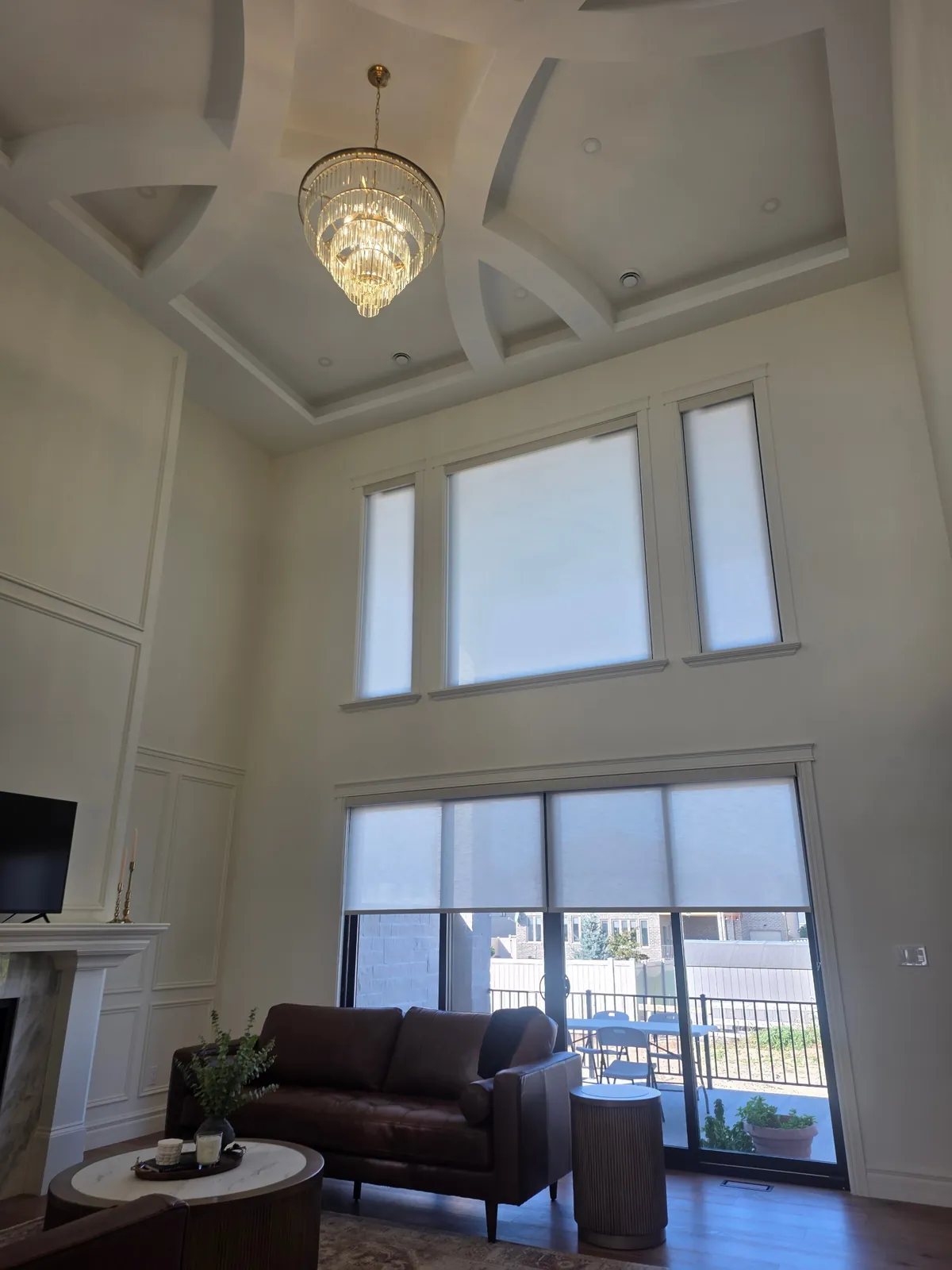
Sunrooms can have ten or more windows. Motorized shades grouped by wall make them effortless: lower the west side at 2 p.m. in summer, raise everything at sunset, close the whole room on winter nights. Solar motors suit sunny sunroom windows well, since the panels get plenty of light. See solar, battery or hardwired.
Fabrics that last in strong sun
Sunroom fabrics get more UV than any other room. Synthetic screen and roller fabrics hold their colour and shape in strong sun far better than natural fibres. Keeping shades partly lowered during the brightest hours also protects floors and furniture.
A tidy line of shades
With so many windows side by side, consistency is key: the same fabric and cassette on every window, and the bottoms stopping at the same height. Motors with saved favourite positions make that automatic.
Glass roof panels
Glass roof panels need a different kind of system from wall windows, so we look at them separately at the visit.
Common questions
What is the best blind for a hot sunroom?
Screen shades with a 1% to 3% openness factor. They cut glare and heat and keep the view. Motorized, they can lower themselves before the room heats up.
Do shades really keep a sunroom cooler?
Yes, especially when lowered before the sun reaches the glass. They also cut glare and protect floors and furniture from fading.
Can sunroom shades be solar powered?
Yes. Sunroom windows usually get plenty of light, which keeps solar motors charged.