Shades for Large Picture Windows: One Shade or Several?
A big picture window is the best feature in many living rooms, and the hardest to cover well. Width, weight and the view all have to be balanced.
In short
- Split the window where its frames divide it, or use one wide shade if the fabric allows.
- Fabric comes on rolls of a set width, which limits how wide one shade can be.
- Large shades are heavy: motors make them effortless.
- Screen fabrics keep the view; drapery covers widths no shade can.
On this page
Why big windows are different
A wide shade carries more fabric, a longer tube or headrail and more weight. Fabric comes on rolls of a fixed width, so very wide shades can need the fabric turned sideways, or a different product. And whatever you choose, it will be the first thing people see in the room.
One shade or several?
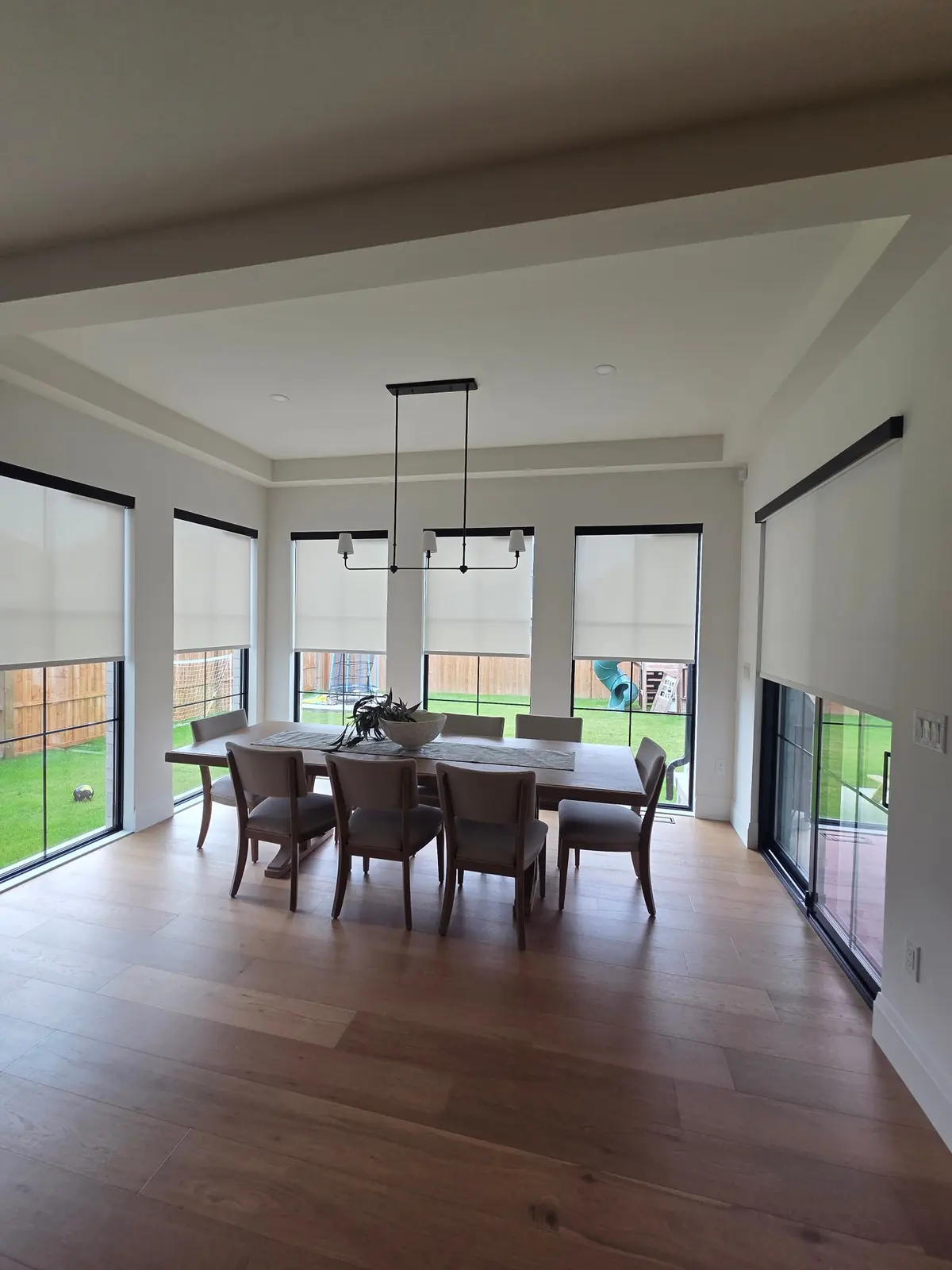
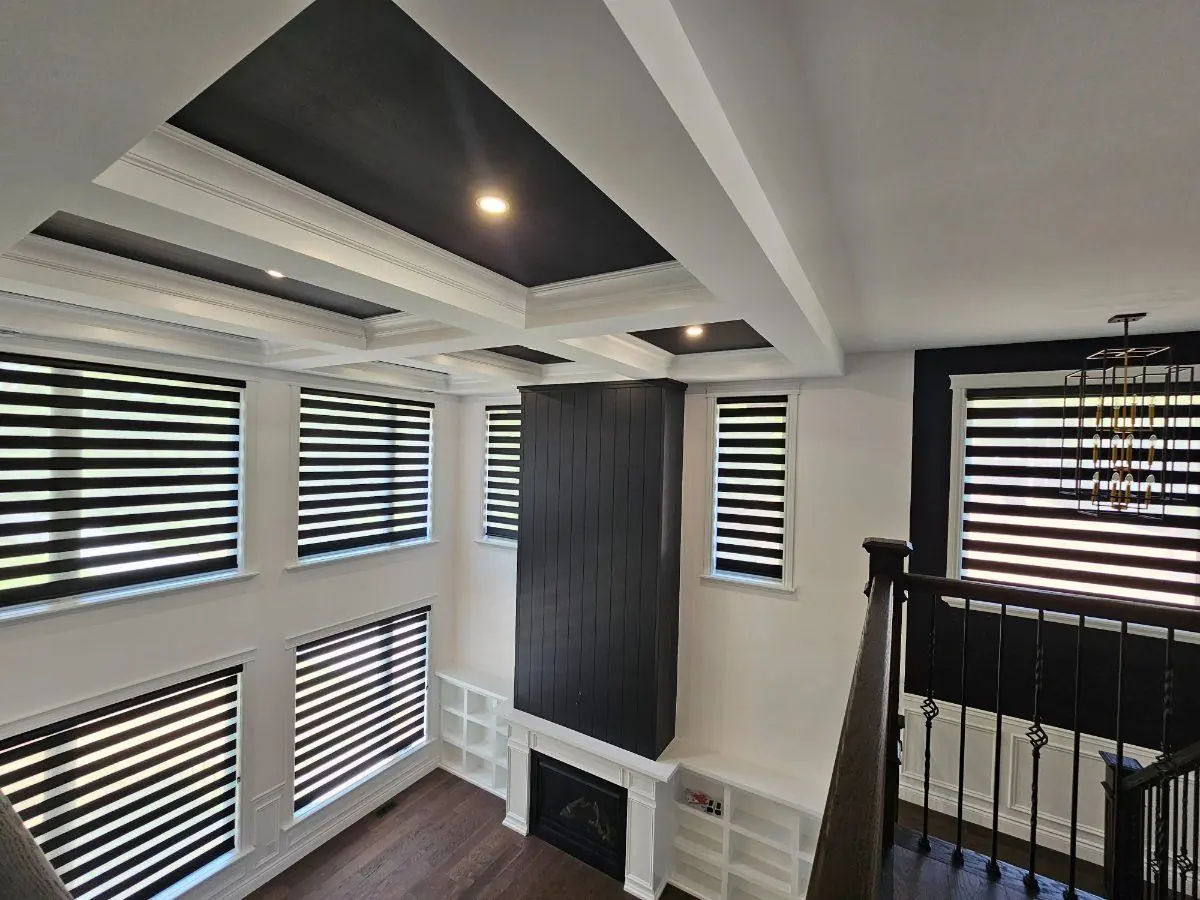
- Several shades split at the window's own divisions (the mullions between panes) look natural, are lighter to lift and let you open just one section. The small gaps between them line up with the frames, so you barely see them.
- One wide shade looks seamless when the glass is one large pane, if the fabric and product can be made that wide.
We look at the window's divisions, which parts open, and where the furniture sits before recommending either.
Fabric width and railroading
Every fabric has a maximum width. Some can be turned sideways ("railroaded") to make a wider shade without a seam; others can't, because of their pattern or weave. Seams on a roller shade show, so we choose a fabric that can be made in one piece or split the window. We check this before quoting, so there are no surprises.
Gaps between side-by-side shades
Two shades next to each other always have a small gap between them. Mounting them close, lining the gap up with a mullion and choosing an outside mount on a flat wall all help. For bedrooms that need full darkness, see blackout curtains or blinds.
Heavy shades and motors
A big shade full of fabric takes effort to lift by hand, and a long chain hanging beside it isn't pretty. Our smart motors deliver 2 Nm of torque, enough for the shades in most homes, and we check the size and weight of every large shade at the measure so it gets the right motor. Group several shades on one button and they move together. See smart motors for blinds.
Keeping the view
For a picture window with a view, screen shades are the usual choice: a 3% openness in a darker colour cuts glare and heat while you see straight through. See roller shade fabrics explained.
When drapery is the better answer
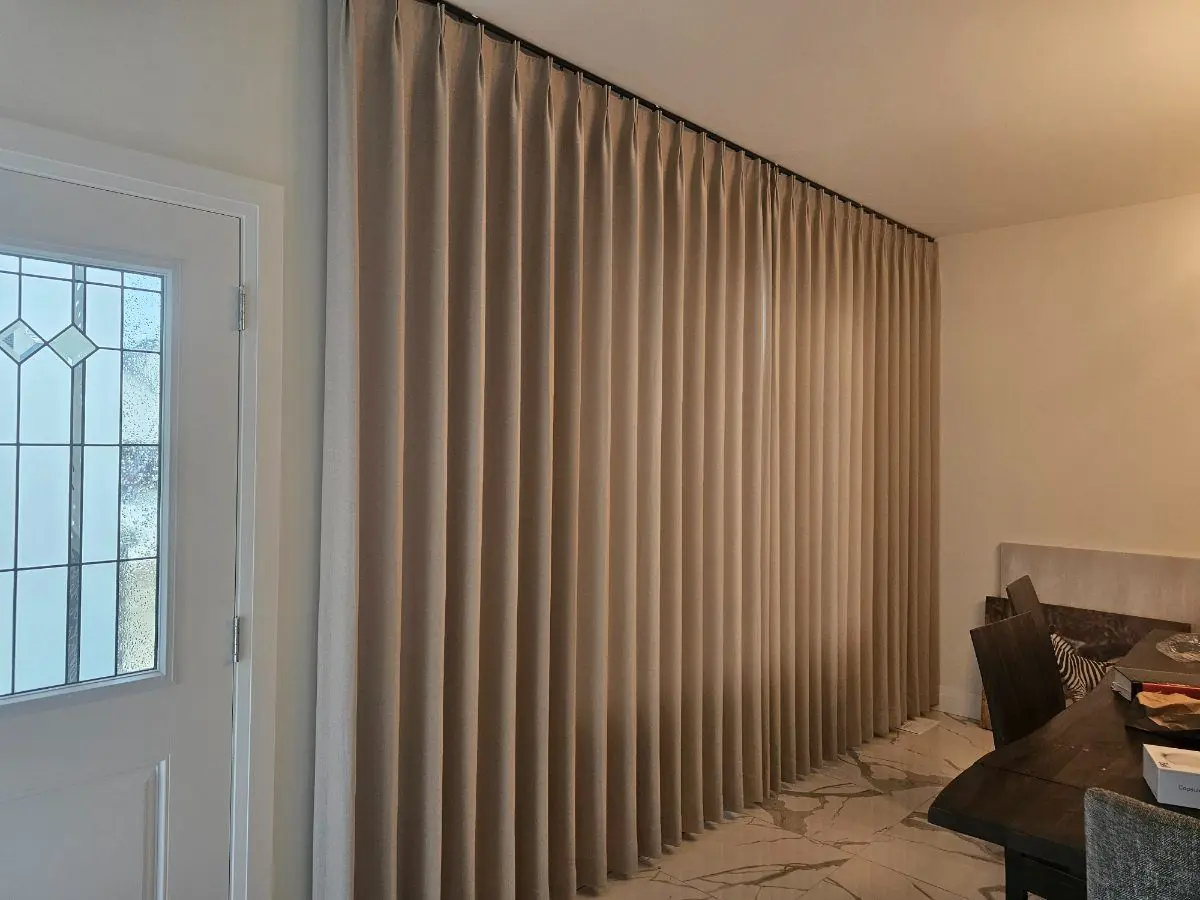
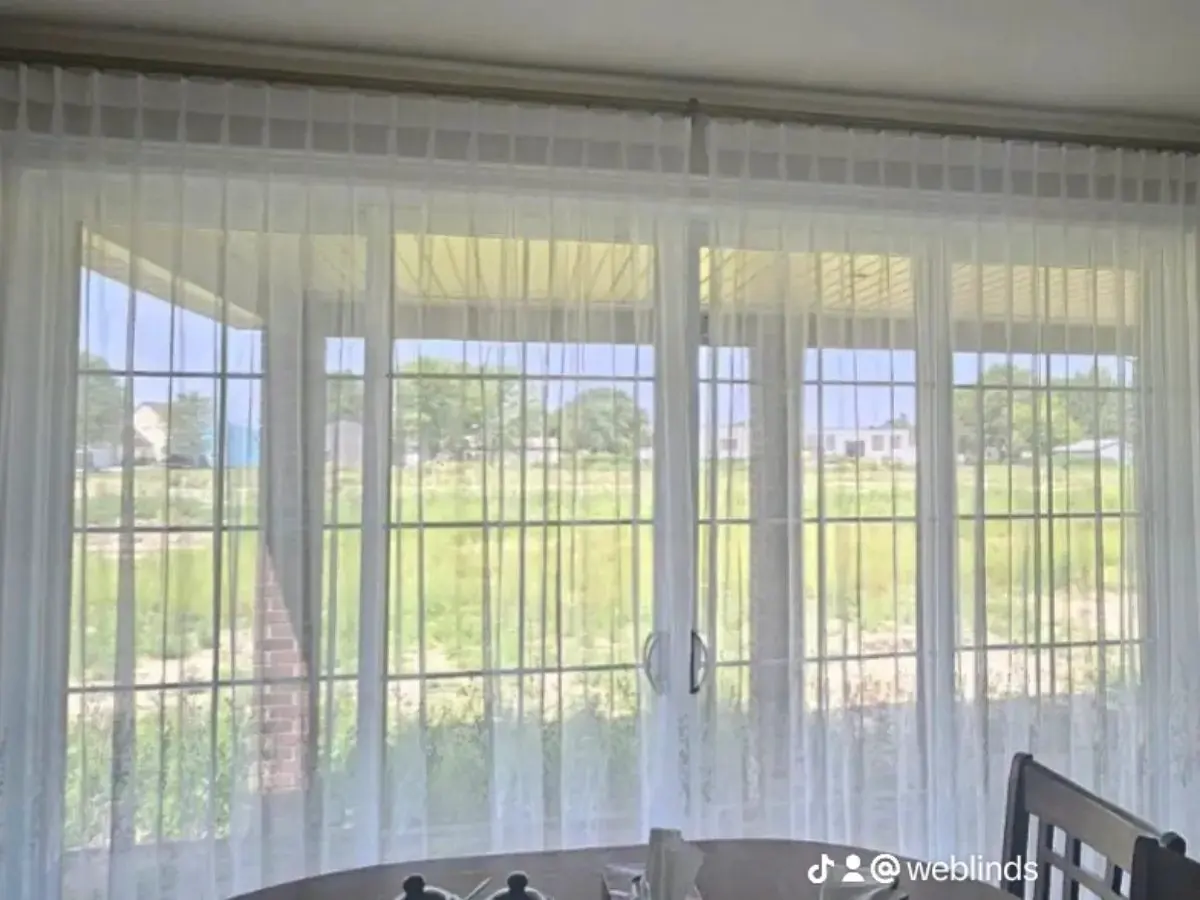
Drapery on a track can cover almost any width in one run, stacking neatly to the sides when open. It also softens a large expanse of glass. Pair it with screen shades for daytime glare, or use sheers and blackout on a double track. See ripple-fold, pinch-pleat or sheer.
Common questions
How wide can a single shade be?
It depends on the fabric and the product. Some fabrics can be turned sideways to make very wide shades; others have to be split. We confirm it at the measure.
Will there be gaps between two shades?
A small gap, yes. Lining it up with the window frame between panes makes it almost invisible.
Should a large shade be motorized?
It makes a big difference on large, heavy shades and on several shades that should move together. Every motor carries our 3-year in-house warranty.