Blinds vs. Shades vs. Curtains: What's the Difference?
People use blinds, shades and curtains interchangeably, and store labels don't help. Here is what each one really is, and when each makes sense.
In short
- Blinds traditionally have slats or vanes; shades are one piece of fabric that rolls or folds.
- Curtains and drapes are fabric panels that slide sideways on a rod or track.
- Zebra blinds are technically a shade, which is why the labels get confusing.
- Most well-dressed windows combine two of the three.
On this page
Blinds
Traditionally, a blind is made of separate slats or vanes, horizontal or vertical, that tilt to control light and stack up or to the side. Light control is precise, but there are gaps between the slats, and every slat collects dust. Today most people choose fabric shades instead, and the word blind has drifted to cover products like zebra blinds that are really shades.
Shades
A shade is a single piece of fabric (or a fabric system) that rolls up or folds up. The main types we install:
- Roller shades: one layer on a tube. Screen, light-filtering or blackout. See roller shade fabrics.
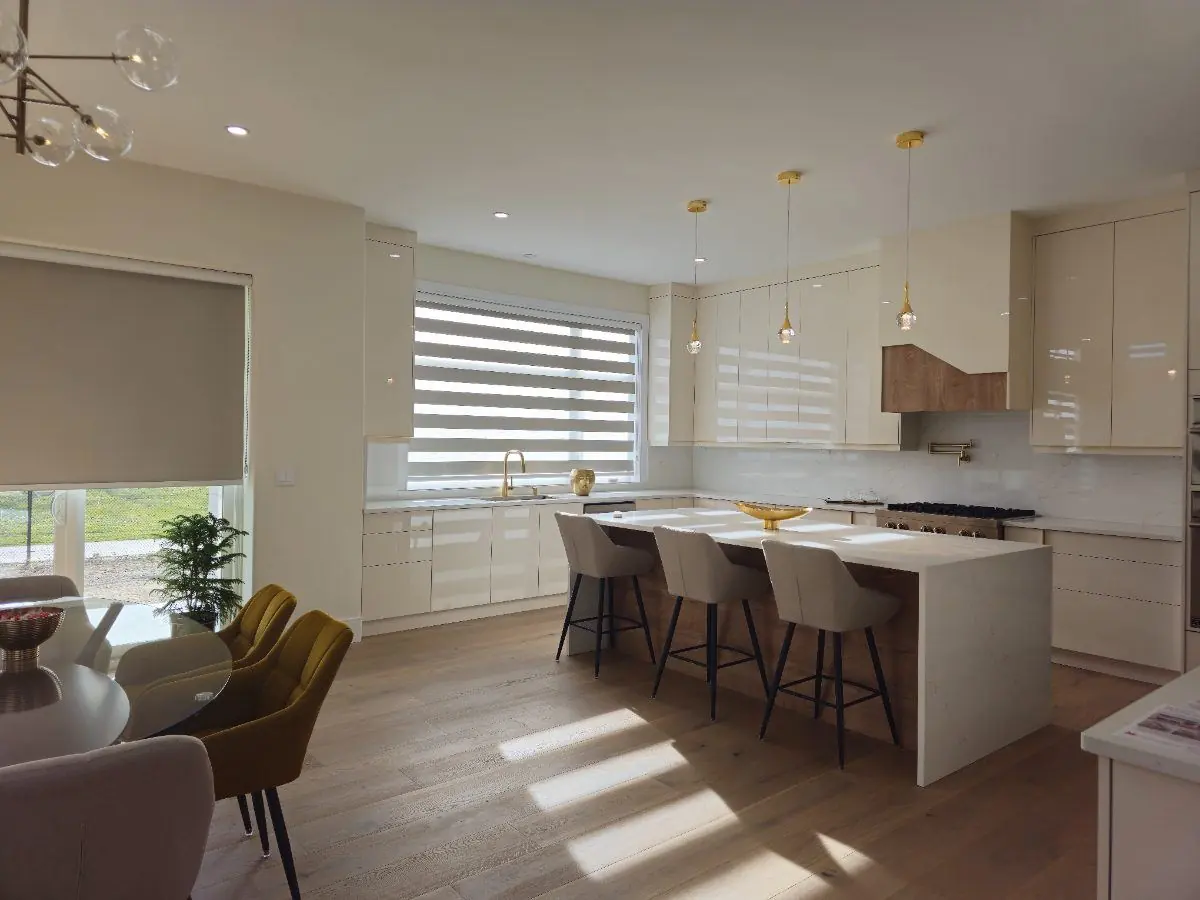
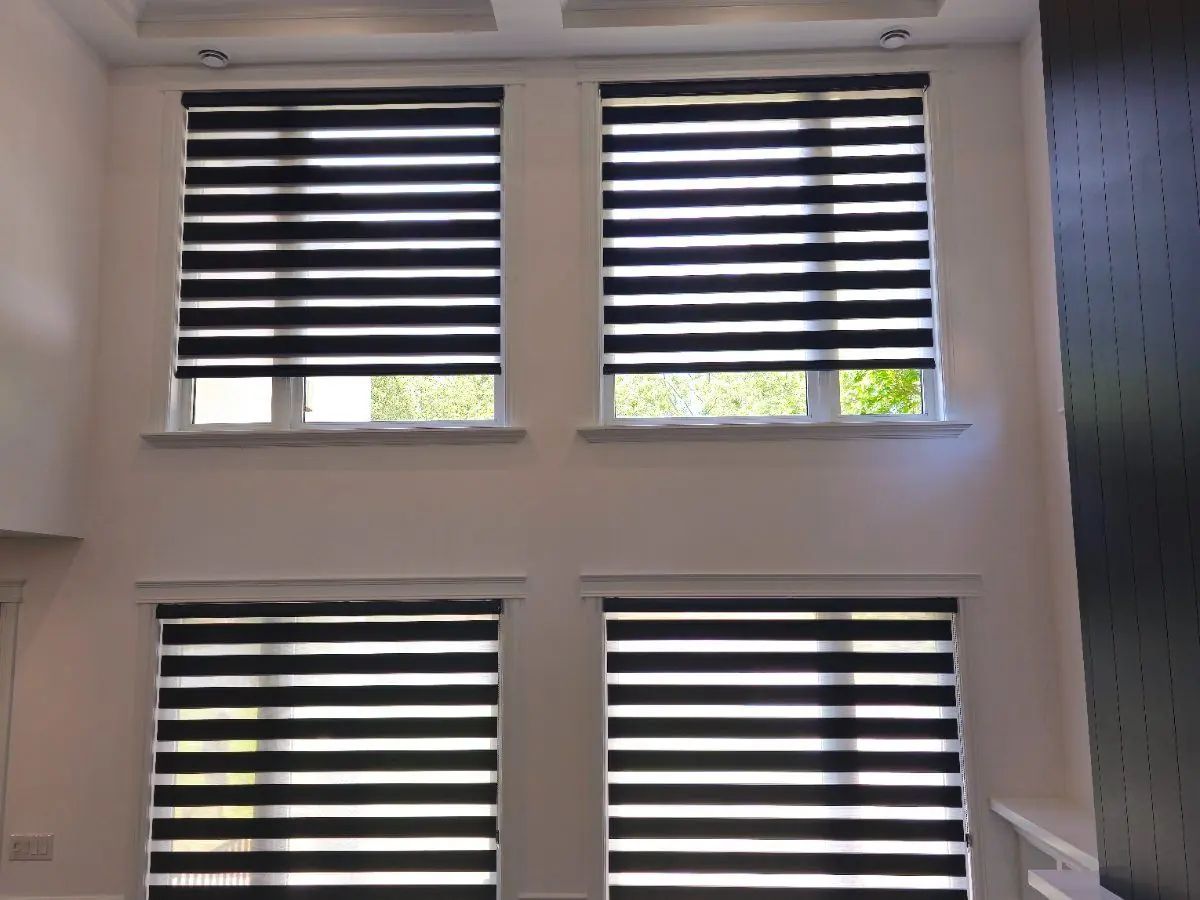
- Zebra blinds: two layers of banded fabric that slide to open or close. See zebra blinds: pros and cons.
- Honeycomb (cellular) shades: insulating cells of fabric. See honeycomb shades.
- Triple shades: soft vanes between two sheers. See triple shades explained.
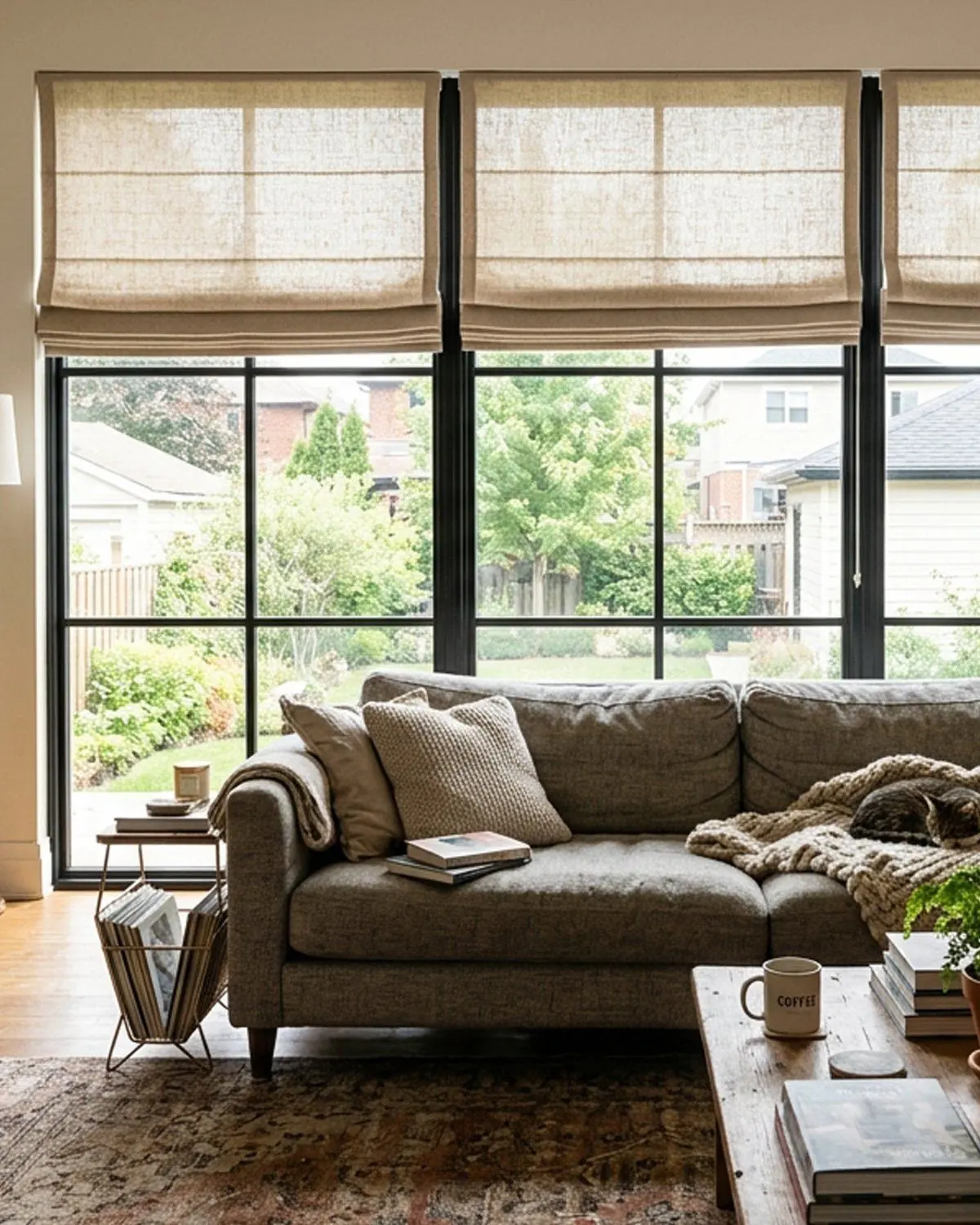
- Roman shades: fabric that folds into soft pleats. See Roman shades.
Curtains and drapes
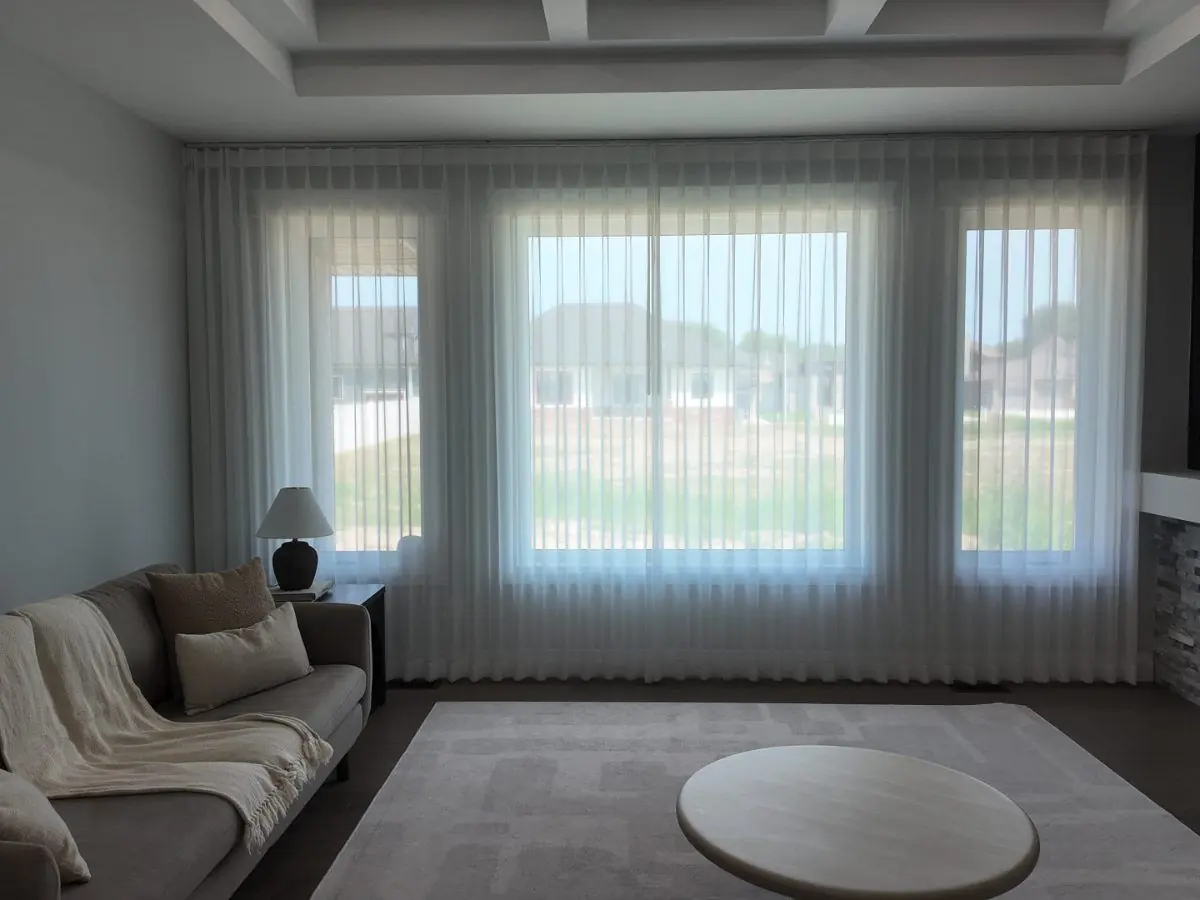
Curtains and drapes are fabric panels that slide sideways on a rod or track. In everyday speech the words overlap. Strictly, curtains are lighter and often unlined, while drapes (drapery) are heavier, lined and usually floor-length. Sheers are the lightest of all. See curtain styles.
Compared
| Shades | Curtains and drapes | Slatted blinds | |
|---|---|---|---|
| Light control | Excellent, fabric decides | Good, best when layered | Precise tilt |
| Privacy | Day and night, depending on fabric | Day and night with lining | Good when closed |
| Insulation | Best with honeycomb | Good with thermal lining | Low |
| Look | Clean and tailored | Soft, adds colour and texture | Practical |
| Space | Fits inside the frame | Needs wall space to stack | Fits inside the frame |
| Cleaning | Dust and spot-clean | Wash or dry-clean by label | Dust each slat |
Combinations that work
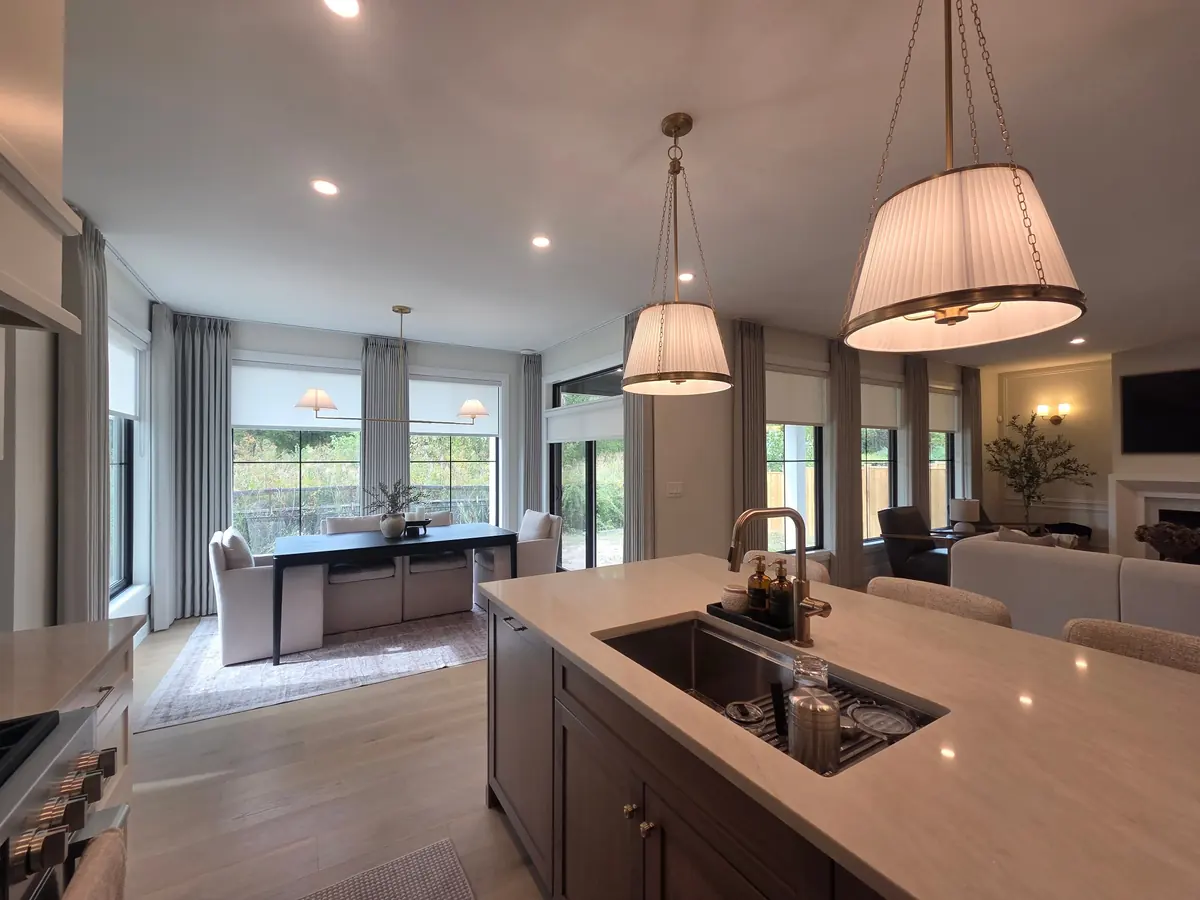
- A shade with side panels: the shade does the work, the curtains add softness.
- A shade behind sheers: sheers by day, the shade closes at night.
- A blackout shade with blackout drapery: the darkest bedroom you can get.
Quick picks by room
- Living room: zebra blinds or triple shades, plus drapery panels if you like softness.
- Bedroom: a blackout roller or honeycomb shade, often with drapery.
- Kitchen: a roller or zebra shade in an easy-clean fabric.
- Bathroom: a top-down/bottom-up shade or a light-filtering roller.
- Patio door: vertical sheers, drapery or two roller shades. See patio door blinds.
Every type can be motorized
We motorize every type of blind and curtain we sell. Roller, zebra, triple, honeycomb and Roman shades take a motor inside the tube or headrail; curtains and vertical sheers run on motorized tracks. Our smart motors deliver 2 Nm of torque. Every motor and its programming is covered by our full 3-year in-house warranty. See motorized curtains.
Common questions
Are zebra blinds blinds or shades?
Technically they are a shade, because they are made of fabric that rolls up. The name blind has simply stuck.
Which is best for insulation?
Honeycomb shades, followed by drapery with a thermal lining. Using both together is warmest of all.
Which is easiest to keep clean?
Roller shades: one smooth surface to dust or wipe.
Which window covering is safest for children?
Cordless or motorized shades and curtains, because there are no cords at all. See child-safe blinds.